Error 404
-
Posts
889 -
Joined
-
Last visited
Content Type
Profiles
Forums
Events
Gallery
Everything posted by Error 404
-
That's what british diplomacy is about...
-
Lol Phantom. Could you please be more specific about that extra sense?
-
ALMA you sound to me like a feminist. yev qo artahaytac mtqer@ stipoghakan bnuyt unen inchpes qo avatar@. Hayastanum kin yev tghamard haraberutyunner@ erek chen steghcvel. Ayn galis e dareric u gnalu e darerov. Isk popoxutyunner yev barelavumnerin yes andsamb dem chem. Bayc mi orva mej mek zhami @ntacqum vochinch ches karogh poxel. Yes hamadsayn em vor vorosh asiakan hatkanishner unen hay tghamardik bayc da chpiti qez hamar himq handisna vor varkabekes Hayastanci tghamardkanc. Yerbemn voroshaki xstutyun@ npastum e @ntaniqi amrutyan@ yev hay knoj xonarh yev orinakeli xarnvacqi dsevavorman@. Isk chapic avel azatutyan hetevanq e darnum ayn hangamanqin vor hay kin@ zbaghvum e marmnavatsharutyamb Arabakan Emiratnerum, Siriayum yev hatkapes Turkiayum. Dra masin inch kases? Yev kcankanai vor mi qich manramasn u stuyg tvyalnerov greir ayn hay tghamardu masin vorin du inqd gites u ov ir axchkan brnabarel e. Cankali e vor bolors imananq te ov e ayd kednanakan bnazdnerov ozhtvac kisamard kisa-anasun@ (yete iharke nman mek@ ka...). Naxoroq shnorhakalutyun.
-
Lol Arpa, I guess she is just trying to be politically correct.
-
Another article about hidden Armenians in turkey. http://www.aztagdaily.com/EnglishSupplemen...012006_0001.htm
-
Even if Armenian Elections were 100% crystal clear and transparent I have no doubt that turks would find something to critisize. I guess only western observers should be sufficient enough.
-
I wonder what do they expect? Turkey officially has no diplomatic relations with Armenia but it wants to monitor political life in Armenia? I think it was a right decision to refuse visas to turkish nationals!
-
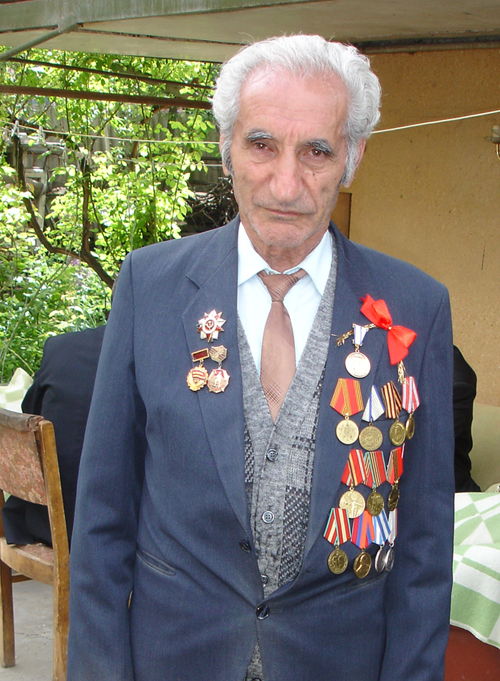
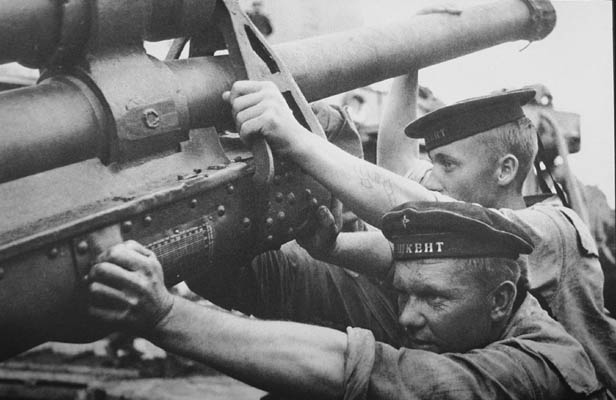
Just want to add some pics... http://upload.wikimedia.org/wikipedia/en/b/b0/Paradejack.jpg This is my Grandpa's Brother: Simon Pap (called him today he was out in Victory Promenade "Monument"). Served in Soviet Navy (Black Sea Fleet: Novorossiysk, Sevastopol) during the war then 3 years as an officer on the Warship after the war. Was injured in combat many times. I have no doubt that he can now swim Sevan from one coast to the other one. My Grandpa(passed away) was Veteran too fought all the way to Berlin. One of their brothers was missed in action in 1941 he was in Border Troops (Sahmanapah). Other one was injured and was captured by Germans then he escaped but was sent to GULAG (Syberia). Stalin did not trust former POW's. Let's not forget Soviet 89th "Tamanyan" Rifle Division which made his way from Stalingrad to Berlin and participated to the glorious battle of Berlin. http://upload.wikimedia.org/wikipedia/en/d/df/TamanyanUnderBrandenburg.jpg Parq Bolorin!



-
Shnorhavorum em bolorin. Yev hatkapes bolor veterannerin ovqer Masnakcel en Erkrord Hamashxarhayin Paterazmin yev veterannerin ovqer masnakcel en Shushii azatagrman@!
-
ALMA qo bacaskaan karciq@ Hayastani u Hayastani Hayeri masin ughaki zarmacnum e inds. Qez ov e asel vor Hayastan@ drner@ pakel e u chi @ndunum otarutyunic veradardsogh hayerin? Gites qani haykakan @ntanqiner en teghapoxvel Hayastan Iraqic, paterazm@ skseluc heto? Yes hamadsayn em kyanqi paymanner@ barenpast chen bayc Hayastan@ u Hayer@ der vochmi veradardsoghi chen vrndel Hayastanic. Astvac chani mi or vor vochmitegh chunenas gnalu, imacir vor Hayastan@ misht qez knduni.
-
Zhamanak "spend" areci u kardaci hodvacd... Inds tvuma yezaki depqer@ charzhi @ndhanracnel bolorin. Ughaki ches uzum mardkanc karciqner@ lses miayn qonn es pndum. Noric em asum kap chuni vorteghi haya. Ka lav mard u ka vat mard. Amerikaci tghamardik irenc erexeqi het en "qnum" kam el amerikaci mayerer@ irenc erexeqi het tmradegher en ogtagorcum u sovoracnum. Chnayac vor dranq el en ezaki depqer yev charzhe @ndhanracnel. Bayc nman baner tesel es haykakan @ntanqnerum? Vor asum em miayn hay tghamardkanc terutyunnern es tesnum chem sxalvum.
-
ALMA inds tvuma sxal karciqi es Hayastanum aprogh hay tghamardkanc masin. Hervic aranc xor@ mtacelu pordsum es entadrutyunner anel hashvi charnelov mer azgain avanduytner@ yev himnvelov otar socialakan chapanisneri vra. Inchqan el vor Hay tghamard@ teri lini na ir mej uni patasxanatvutyan yev nvirvacutyan mi mec zgacum vor@ voch mi urish azgi tghamard chuni ! Hay tghamard@ yerbemn kopit e, yerbemn birt u vayreni bayc mievnuyn zhamanak ardar yev hogatar. Inds tvum e erbeq u vochmitegh ches gtni mi andsi vor ozhtvac lini bolor drakan hatkutyunnerov voronq vor trvac en mard araracin. Chka mardkain etalon. Uremn piti bavararvenq haraberakan drakan kerparnerov. Du pordsum es miayn tesnel nranc(hay tghamardkanc) mej terutyunner voronq ches tesnum otar tghamardkanc mej. Isk otar tghamardkanc terutyunner@ moranum es. Mi moracir vor Ara Geghecikin el Qaj Tatulin el kanayq korcanecin...
-
No he is getting awards for what he has done... http://www.depauw.edu/news/index.asp?id=19438 LA Times Managing Editor Doug Frantz '71 to Judge Prestigious Loeb Awards Doug Frantz 2.jpgMay 7, 2007, Greencastle, Ind. - Douglas Frantz, managing editor of the Los Angeles Times and 1971 graduate of DePauw University, has been named to the final judging panel of the Gerald Loeb Awards for Distinguished Business and Financial Journalism. The Loeb Awards, the most prestigious honors in the field, recognize journalists who have contributed to the public’s understanding of business, finance and the economy. Frantz's appointment was announced today by The G. and R. Loeb Foundation and UCLA Anderson School of Management. Loeb Awards final judges serve as advisors to the program and are responsible for selecting winners from among the finalists in the competition categories, as well as the recipients of the career honors, the Lifetime Achievement Award and Lawrence Minard Editor Award. "Frantz was named managing editor of the Los Angeles Times in 2005," notesDoug Frantz.jpg today's announcement. "He oversees the Times' major newsgathering operations, including foreign, metro, national, Washington, business, sports, science, obituaries and Column One. Frantz has served nine years with the Times ... He was city editor of the Albuquerque (N.M.) Tribune from 1975 to 1978. He then joined the Chicago Tribune as a metro reporter and later served as a Washington reporter. From 1994 to 2003, Frantz was an investigative reporter and foreign correspondent for the New York Times, later becoming the paper's investigations editor." The text continues, "Frantz is a two-time Pulitzer Prize finalist ... His other investigative reporting honors include a 1995 and 1997 Worth Bingham Prize and a 1993 Goldsmith Prize. Frantz, with his wife, Catherine Collins, are currently working on a biography of AQ Khan, the father of Pakistan's nuclear program. They also have co-authored Deathstewart disneywar.jpg on the Black Sea: The Untold Story of the Struma and World War II's Holocaust at Sea, Celebration USA: Living in Disney's Brave New Town, and six other nonfiction books. He earned a bachelor's degree from DePauw University and a master's degree in journalism from Columbia University." Frantz, who majored in English composition at DePauw, serves on the advisory board for the Eugene S. Pulliam Center for Contemporary Media. Read more by clicking here.
-
Be carefull man. Also stay away from russian skin heads. Those bastards don't understand friends or foes.
-
So with 25 000 - 50 000 they have captured Anatolia and Armenia and put the foundation of ottoman evil empire? I wonder how did that happen. Probably everyone were involved in crossade and did not pay attention to the real danger coming from the east.
-
I was wondering if I download this video and put it on youtube will it put the lives of people in the documentary in danger?
-
Can you give us the link?
-
Hrant Dink was on right path to reveal these people to wake up their minds. Unfortunately the "ideology of turkishness" killed him.
-
Perhaps I wonder sometimes how strong the ideology of turkishness spread by mongol tatars could be in people of Anatolia. Sometimes I think there is no turk left in Turkey. The whole population of Turkey are former Armenians, Greeks, Assyrians etc. Even now when I watch them in internet or TV I think that there is nothing mongolic left in them. The famine has long gone. But the ideology of turkishness and islam still keeps these people together. Maybe we should start from there to wake them up and let them know that they are not mongols anymore and they are not turks either? Then there will be no Turkey and turkish nation in the world. Everyone will return to it's roots. Recent DNA tests show that the majority turks are very closely related to the greeks.
-
What a piece of shit are those azeri bastards. They can't even behave civilized way in the public. I hope our guys teached those bastards good lesson. I have an impression we have to keep the rubber sledge hammer always on top of their heads. Otherwise they get spoiled soon.
-
Finally, ANCA joined to the issue. Hima gluxner en trnelu... Guys join the action! This is ANCA's email to me: May 1, 2007 ACTION ALERT FIGHT LOS ANGELES TIMES DISCRIMINATION DEMAND MANAGING EDITOR DOUG FRANTZ'S RESIGNATION A few weeks ago, Los Angeles Times Managing Editor Douglas Frantz went out of his way to kill a story on the Armenian Genocide. The basis he used for killing the story were allegations that the Armenian American reporter who wrote the article had a “conflict of interest” on the subject and had circumvented the normal process for articles. Both of Frantz's accusations have since been proven completely baseless according to an internal investigation. Yet, Frantz has experienced no repercussions whatsoever for his discriminatory, and potentially illegal, behavior. Doug Frantz's accusations against journalist Mark Arax were discriminatory and unethical. His actions demonstrate that he is unfit to be a managing editor for the Los Angeles Times, which is a well-respected newspaper. Join tens-of-thousands of concerned Los Angeles Times readers in helping ensure that this prestigious paper is not further damaged by the actions of one disreputable editor. Below is the text of the email sent through ANCA's website: Strong message huh? Ba vonc ba kraki het ho xagh chen anum...
-
hosank your posting is not in the right thread.
-
Hey guys, how about each of us sends a protest email to the Chief Editor of LA Times O'Shea ? That way we could have done more work than just talking about the issue. This is really in our competence. It happened in LA and we have a big diaspora here. If you need a sample text for reference I can post here my email to them. A prominent Armenian editor is getting discriminated because of his ethnicity...
-
http://www.latimes.com/news/opinion/commen...omment-opinions 'Never again' for Armenians too Several American Jewish groups abandon their anti-genocide zeal when it comes to Turkey's massacre of Armenians. By Daniel Sokatch and David N. Myers, DANIEL SOKATCH is executive director of the Progressive Jewish Alliance. DAVID N. MYERS teaches Jewish history at UCLA. May 1, 2007 THIS YEAR, Congress established April 15 as Holocaust Memorial Day, commemorating the Nazi genocide of European Jewry. Just nine days later, on April 24, Armenians throughout the world observed the commemoration of their great tragedy: the massacre of as many as 1.5 million Armenians at the hands of the Turks that began in 1915. In many ways, it was the 20th century's first genocide that helped set the stage for its largest, including Rwanda and now Darfur. Adolf Hitler reportedly said, on the eve of his invasion of Poland in 1939, "Who, after all, speaks today of the annihilation of the Armenians?" For the last 60 years, the Jewish community has labored to avoid granting Hitler, in the words of philosopher Emil Fackenheim, "a posthumous victory." Jews have taken as their motto "never again," and most tend to understand that this charge refers to all of humanity, not only to fellow Jews. One of the last surviving leaders of the Warsaw Ghetto uprising, Simha "Kazik" Rotem, once said that the central lesson of the Holocaust to him was that the Jewish people should stand vigilant against genocidal acts directed at any people. This is why it is troubling that some major Jewish organizations have lined up in support of Turkey's efforts to keep the U.S. Congress from recognizing the Armenian massacres as an act of genocide. The Anti-Defamation League (ADL), the American Jewish Committee (AJC), the Jewish Institute for National Security Affairs (JINSA) and B'nai B'rith International recently conveyed a letter from the Turkish Jewish community opposing a resolution recognizing the genocide. The ADL and the JINSA also added their own statements of opposition, suggesting that the massacre of Armenians was a matter for historians, not legislators, to decide. The American Jewish community has insisted, and rightly so, that the U.S. Congress, the United Nations and other governmental bodies formally commemorate the Holocaust. Why should Jews not insist on the same in this case, especially given the widespread scholarly consensus that what happened to the Armenians from 1915 to 1923 was genocide? After all, the man who coined the term "genocide" to refer to the Holocaust — the Polish-Jewish lawyer Raphael Lemkin — cited the Armenian massacres as a precedent. The unfortunate and well-known answer to the question is that Turkey has fiercely opposed efforts to call the Armenian massacres "genocide." Moreover, it has asked its friends to help beat back the attempts at historical recognition. Jewish opposition to recognizing the Armenian genocide comes mainly from a desire to safeguard the important strategic relationship between Turkey and Israel. Alone among the world's Muslim nations, Turkey has forged close military, political and economic ties with Israel. In addition, Jews remember with a deep sense of gratitude that Turkey served as an important haven for their forebears fleeing persecution, from the time of the Spanish Expulsion in 1492 to the dark days of Nazism and beyond. And it is not just that Turkey has been kind to Israel and the Jews. It is a critically important U.S. ally in a dangerous region racked by religious extremism. Nobody is suggesting that Jews forget Turkey's historic friendship. But it is a mistake for Jews — or, for that matter, anyone — to surrender the moral imperative of condemning genocide in the hopes of avoiding a perceived, but by no means necessary, strategic loss. Similarly, it would be a mistake for Turkey to hinge its own strategic interests on the denial of past criminal acts. Coming to terms with the past, as democratic Germany has done in the aftermath of the Holocaust and South Africa in the wake of apartheid, is the best path to political legitimacy. Turkey, a trusted ally and friend of the Jews and the United States, must come to terms with its past for its own sake. It is that battle that leading Turkish intellectuals, including Nobel laureate Orhan Pamuk and martyred Armenian activist Hrant Dink, have been waging so nobly. We should do all in our power to strengthen the hands of these figures and avoid the abyss of historical revisionism. Sixty years (and millions of historical documents) later, the world still has to contend with those who deny the Holocaust. We need only recall the shocking words and deeds of Iranian President Mahmoud Ahmadinejad on this score. In response to such denials, all decent-minded people, and Jews in particular, must continue to declare loudly "never again" — not only to future genocides but also to the attempted denial of past genocides, regardless of who the perpetrators or victims are.
-
Some follow up on the issue. http://www.laobserved.com/archive/2007/04/...rops_a_bomb.php Arax drops a bomb Kevin Roderick Times staff writer Mark Arax just escalated — in a big way — his dispute with the paper's managing editor over a recent story about the Armenian genocide. He emailed an open letter to everyone on the news editing system laying out his side and demanding a public apology from Managing Editor Doug Frantz. Here's the whole thing; links to the background are at the end: From: Arax, Mark Sent: Monday, April 30, 2007 10:48 AM Subject: from Mark Arax April 30, 2007 Dear Colleagues, I am not sure about the timing of writing you. In no way do I want my personal issue to add to the turmoil inside the Times. But as I’ve watched our newspaper respond to my issue over the past several days, I’ve come to conclude that it raises troubling questions that go right to the heart of what we do and how we do it. I know of no other way to explain the matter to you than to proceed straight with logic. I have been accused by Doug Frantz of having an opinion on the Armenian genocide. “Are you now or have you ever been a believer in the Armenian Genocide?” Of the numerous accusations that Frantz has thrown my way over the past month, this one I am happy to plead guilty to. Yes, I have a stance on the Armenian genocide. I believe it happened. And I am gratified to know that my newspaper believes it happened, as well. So here is the dilemma at hand: What is our obligation when this same newspaper, in stories from Istanbul in 2004 and 2005, begins to contradict its policy on the genocide? What is a reporter to do when members of the Armenian community—judges, politicians, civic leaders--start calling and demanding to know why the newspaper is suddenly throwing qualifiers in front of the word “genocide?” This was the question confronting me and Greg Krikorian and Ralph Vartabedian and Robin Abcarian in the fall of 2005. So we did what our Jewish and African American and Latino and Asian colleagues have done countless times when faced with an ethnic community angry over our coverage. We went to our editors. We reminded them in a letter that the newspaper had an official policy on the genocide—that it happened, that there was no need to equivocate or treat it like a “he said-she said” dodge. We pointed out chapter and verse in the Times style book. “The Armenian genocide is a historical fact and we should use the word ‘genocide’ without qualification in referring to it.” To act as our newspaper’s eyes and ears and help correct the error was our duty. To stay silent would have been a dereliction of that duty and only served to damage our newspaper’s public standing even more. Thus, the proper question confronting Doug Frantz as he read my story three weeks ago on the Armenian Genocide resolution in Congress is not whether I believed in the Armenian genocide or signed that letter in September 2005. The proper question—the only question that mattered--was whether I had allowed my beliefs to bleed into my story in a way that made it tendentious. This is the same question that every editor must ask of every story because all reporters, all human beings, have opinions. And yet it does not matter, really, what Henry Weinstein believes in his gut about capital punishment. It does not matter what Megan Stack utters over dinner about the war in Iraq. It does not matter what Robert Lopez writes in a memo to his editor about our coverage of border issues. The only question that needs to be answered is if their biases are on display in a story. This is what we have spent years training as journalists to put aside—our own quarrels, our own narratives, our own wounds. This is how I, the son of a murder victim who had spent more than half his life searching for the killers, was able to go inside the California prison system and uncover official abuses against murderers and rapists. Let me now briefly explain what happened to my genocide resolution story as it made its way through the editing process in early April. Bob Ourlian had first crack at it. He removed a few paragraphs here and there for space. He removed a handful of words that he considered imprecise or too loaded. Then he put the story on the budget—“it’s a great read”—and began to sell it for Page 1. As the story moved up the chain of command, no editor called Ourlian or me to alert us to any bias or need for more reporting. Not Joan Springhetti or Tom Furlong or Scott Kraft or Craig Turner. And here is the crux of the matter. Not even Doug Frantz, in his e-mail to me explaining why he was putting the story on hold, said one word about bias or any problems with the story itself. No holes, no contextual problems. Instead, Frantz told me he was holding the story—a hold that later became a kill—because of two other issues: One, because of the 2005 letter to our editors (Frantz called it a “petition”) I had taken a public stance on the issue and had a “conflict of interest.” Two, Bob Ourlian and I, as a pair of Armenians, had gone around the established system to plant a story about the Armenian genocide resolution. So rather than judge my story on its merits, Frantz suddenly chose to take a gratuitous leap and look into my heart as a writer and the ethnic heritage I was born with. This is dangerous stuff. For one, it raises questions that are impossible to answer. And it has grave implications for all of us, for every journalist in every newsroom. In other words, it is not good enough for the story itself to be fair, objective, well reported and well written. Even when a story passes all those tests, it could still be censored by some tortured inference that the reporter holds an opinion, even though that opinion never shows up in the story. So my story never ran. A completely different story by Rich Simon replaced it. To justify this, the top editors have now manufactured all sorts of after-the-fact reasons in explaining why my story needed a “new angle.” And what became of Frantz’s two stated reasons for killing my piece? Jim O’Shea told me the HR investigation has concluded that Bob Ourlian and I had followed the proper procedure in compiling and editing the story. And the letter the six of us signed in 2005 did not address a genocide resolution in Congress but rather the fact of the genocide itself. Thus, it was not a form of advocacy, he said. In other words, Frantz’s two reasons for killing the story have no merit. I hope you don’t think it selfish of me, but I believe I deserve a public apology from Frantz. And I believe that the five colleagues who signed the letter with me—Krikorian, Vartabedian, Abcarian, Weinstein and Chuck Philips--deserve to hear from our editors that our letter was the right thing to do. Are we to stop our conversation inside the paper about issues of fairness and accuracy in fear that raising those issues might someday disqualify us from ever writing about a subject again? If we can no longer trust that we will be judged on the merits of our work—the words carried on the page--then the very foundation of our vocation is destroyed. What the six of us did wasn’t a public display. We didn’t grab a bullhorn in one hand and a petition in the other and take to the corner of First and Spring. What we did we did inside the paper as loyal employees who care deeply about the Times. In no way should the carrying out of this duty preclude us from writing about the Armenian genocide now or in the future. Thank you for your ear. Respectfully, Mark Arax Ourlian is an editor in the Washington bureau. Word going around Times staffers at this weekend's Festival of Books was that editor Jim O'Shea ordered Frantz to make a public apology and that it wasn't going down too well with Frantz. No confirmation on that from O'Shea (who I had two pleasant conversations with this weekend) or Frantz