Aratta-Kingdom
-
Posts
3,251 -
Joined
-
Last visited
-
Days Won
1
Content Type
Profiles
Forums
Events
Gallery
Everything posted by Aratta-Kingdom
-

AZERBAIJANI PHILOSOPHER: AZERIS USE ARMENIANS AS PERSONAL STANDARD
Aratta-Kingdom replied to Yervant1's topic in Life
BLOGGER: AZERI SOCIETY SUFFERS FROM ARMENOPHOBIA PanARMENIAN.Net August 5, 2011 PanARMENIAN.Net - Armenophobia became a uniting factor in the Azerbaijani society, Chairman of the Armenian Association of Intellectuals said.. "Regretfully, it is also observed in the more or less intellectual part of the society," Tigran Kocharyan told a press conference in Yerevan, adding that Azeri society suffers from Armenophobia, as even intellectuals sink into primitive nationalism. "We come for a game, but they come to solve their problems and complexes," he said when commenting on the scandal with recent Batumi-hosted 13th South Caucasus Intellectual Games Championship. He also noted that Azeris celebrate their victories as if they entered Stepanakert or Shushi. "It is ridiculous. This is just a game. You won the game; well done! We ourselves will come up and congratulate you," Kocharyan said. "Armenian team did not yield in a 'shirt war'. We played in the shirts, but they did not," he said, touching upon the scandal with shirts and pointed out the state support in this issue, particularly, from the Foreign Ministry. Kocharyan underscored that presently Azerbaijan makes essential input in What?Where?When? game, that is proved by representation of Azeri members in Intellectuals' Elite Club. "The goal N1 of Azerbaijani state is to change image of Azeris in Russian society. Roughly saying, so that to rise from the greengrocery salesmen to elite people. And they obtained serious progress in it," the Association head said. 13th South Caucasus Intellectual Games Championship which was held in Batumi, Georgia, July 29-31, resulted in a scandal. When Azerbaijani delegation saw one of the Armenian teams, namely DAF, dressed in shirts with advertisement of a sponsor Artsakh-Alco, it started protesting from the very first day of the championship, demanding from the organizers to forbid the Armenian team to play in those shirts. It should be noted that DAF wore those shirts during last-autumn World Championship in Israel, and no claims were put forward relating to the shirts then. After the organizers of the contest offered delegations to stop politics and continue the game, a part of Azeri delegation headed by a well-known Balash Kasumov came at July 31 brain-ring game in provocative shirts, with the writing about "Republic of Armenia's belonging to Azerbaijan", the so called, "Erivan khanate". As a result of protest on the part of Armenian delegation and following continuing talks between organizers and both countries delegations, the organizers were forced to cancel the brain-ring. Besides, the Armenian delegation on behalf of all 14 teams' captains, participating in the championship, unanimously decided to leave the championship. -
AZERBAIJANI PHILOSOPHER: AZERIS USE ARMENIANS AS PERSONAL STANDARD
Aratta-Kingdom replied to Yervant1's topic in Life
RACIST PLEASURES AND ALIYEV'S SINCERITY Tevan Poghosyan Mediamax http://www.mediamax.am/en/column/12115/ Aug 2, 2011 Armenia Some may remember the joke about the trade-offs to get stuff: three people talk about how they get things, and the first two start a lengthy story about what that had to trade off for one or the other achievement. The third suddenly feels inspired with the honest conversation and confesses that stuff has happened to him, but only twice, and as a matter of fact, all he got was pleasure (hey, guys, as we're shooting straight...). In fact, this is a little fun story about how one misinterprets the game the others play, adopts the street jargon and decides that he can also participate, thus messing up the whole show and embarrassing himself. Ilham Aliyev recently appeared in a similar situation, when he felt inspired and decided to catch up with his elder brother. A quote from the President of Azerbaijan during the joint press conference with the Prime Minister of Turkey in Baku: "This proves that something is missing in the heads of these people" (aka Armenians - T.P.) I'm not surprised when the Turkish diplomacy starts a large-scale hysteria over a made-up story: eventually the Protocols are not ratified. The documents are a bone stuck in the throat of Turkey, and it is unable to either swallow it or spit it out. I'm not surprised when the Turkish Prime Minister Erdogan asks for an apology from Armenia for a groundless accusation, and when the deputy prime minister Bulent Arınc tells Armenians "Come to your senses". Many are aware of the vulgar and uncivilized diplomatic discourse of Turkey, and I'm certain that these statements will still be addressed by the Armenian side at a right moment and in the right format. I'm not surprised that the President Gul has not joined this fake Turkish-Azerbaijani campaign and has not made any statement regarding this incident. I believe he won't make any statements in the future as well. What I'm really surprised at is the behavior of Ilham Aliyev who was inspired by the street slang of the Turkish leaders. Without understanding the logic of the means of expression of the Turkish diplomacy, and without realizing that even in their uncivilized discourse the Turkish leaders do not cross the line, the Azerbaijani President blurts,"this proves that something is missing in the heads of these people", as if trying not to be left out of the conversation, or perhaps feeling secure next to the elderly brother. He basically insults a whole nation. This is a brave behavior indeed. I have nothing else to add. I just wonder: was it for pleasure at least? Still, pleasure or not, some questions are in the air. Will the sides involved in the regulation the conflict, the co-chairs remain silent when a whole nation has been insulted? Will the leaders of the European community keep silent when they are perfectly aware that hurting national dignity does not contribute to peace-building in any way? Such actions actually waste all the efforts hundreds of organizations in the region have been investing in establishing peace for years, and in many cases these efforts have been financed by the European taxpayers. Will Turkey remain silent? Turkey, which though involuntarily, has provided its Prime Minister as a background for the Azerbaijani President to label nations during a joint press conference. These are important questions which will bring about even sharper ones if no answers are provided. -
AZERBAIJANI PHILOSOPHER: AZERIS USE ARMENIANS AS PERSONAL STANDARD
Aratta-Kingdom replied to Yervant1's topic in Life
AZERBAIJANI SINGER FORCED TO REMOVE ARMENIAN FRIEND FROM FACEBOOK FRIENDS' LIST epress.am 08.02.2011 Photos of Aynishan Guliyeva (pictured, second from left, second row), Azerbaijan's contestant in the 20th International Performers Contest at the Slavianski Bazaar alongside Armenia's contestant Narek Makaryan (pictured, in purple tie) resulted in a wave of discontent by internet users. According to Aze.az, Guliyeva was forced to remove Makaryan from her list of Facebook friends. Guliyeva's mother, Aybaniz Gashimova, who accompanied her daughter to the song contest in Vitebsk, tried to justify and explain how it came to be that her daughter was in a photo with an Armenian. "This Armenian boy expressed his love for Azerbaijan; the organizers were constantly putting him next to Aynishan. We are a peace-loving people; we couldn't drive him away from us - the participants and guests of the festival saw everything. That Aynishan was photographed with an Armenian doesn't mean we have forgotten our martyrs. No! Our family has experienced great sorrow, but we have shown peacefulness. We could not push him away or be rude and thus disgrace our country," said Gashimova, reports Aze.az. -
From the teachings of Gurdjieff: Q. Is self-remembering the initial process of this system? A. It is the centre of the initial process, and it has to go on, it must enter into everything. At first this sounds improbable, because you may try to remember yourself, and then you find that for long period of time it does not come to your mind; then again you begin to remember about it. But efforts of this kind are never lost; something accumulates and at a certain moment when in the ordinary state you would have been completely identified and submerged in things, you find that you can stand aside and control yourself. You never know when it will be or how it comes. You must only do what you can---observe yourself, study, and chiefly try to remember yourself; then, at a certain moment, you will see result. Q. How does one begin to use memory in the sense of self-remembering? A. Self-remembering is not really connected with memory; it is simply an expression. It means self-awareness, or self-consciousness. One must be conscious of oneself. It begins with the mental process of trying to remember oneself. This capacity to remember oneself must be developed because in self-remembering we must try to study our FUNCTIONS separately from one another---intellectual function separately from the emotional, instinctive separately from moving. This is very important but not easy. Q. Do you mean we should practice observing these different functions? A. Yes, at certain moments of the day we must try to see in ourselves what we think, how we feel, how we move and so on. At one time you can concentrate on the intellectual function, at another time on the emotional, then on the instinctive or the moving. For instance, try to find out what you are thinking about, why you think, and how you think about it. Try to observe physical sensations such as warmth, cold, what you see, what hear. Then every time you make a movement you can see how you move, how you sit, how you stand, how you walk and so on. It is not easy to separate instinctive functions, because in ordinary psychology they are mixed with the emotional; it takes some time to put them in their right place. Q. Would there be any sense in breaking down certain habitual actions, such as going to bed at a certain time at night? A. Mechanical changes of that kind may be useful in the very beginning of self-study, but they cannot produce any lasting effect. They may help you to see something that you would not have seen otherwise but, by themselves, they cannot produce any change. Change must being from inside, from change of consciousness, from the moment when you begin to remember yourself or even earlier, when you begin to realize the possibility of self-remembering and that it is really important. Only unfortunately it often happens that people start well and then lose the line of efforts. Q. Does observing mechanicalness impair mechanicalness? I was of physical work. A. Without work on consciousness all the sides of us that can be conscious will become more and more mechanical. Only very uniform work without any variation is totally mechanical. If work is a little more complicated, then the more mechanical it is the worse it is. In one work is mechanicallness useful---one has to adapt, to change methods in order to produce good work, and for that one has to be aware of what one is doing. Being efficient in physical work does not mean mechanicalness. Training does not make us more mechanical. Being an expert means being intelligent about one's work. Q. The moving and instinctive centres seem to work more evenly and normally than intellectual and emotional. Why is this so? A. Because otherwise people wold go to the left instead of going to the right and never get where they want to go. And if the instinctive centre were like the intellectual and the emotional centres are now, a man would soon himself. A certain degree of normality is obligatory for the instinctive and moving centres. Other centres can go mad without immediate harm. In order to understand man's mechanicalness it is very useful to learn and to understand the chief divisions of functions not only in general, not merely in theory, but to study them in their activity, to learn how they work. This division into four function is only a preliminary division, because each of them is gain subdivided. All this has to be studied and understood by observation, because theorical study does not give the same result, does not lead to the same conclusion, does not show the same truth. For instance, very few systems recognize the existence of the instinctive cnetre or instinctive mind, and no system I have heard of recognizes the existaence of and independent moving mind. Yet moving mind plays a very important part in our life, so the absence of this division spoils to a great extent the results of ordinary observation of man, particularly in modern psychology, for, since this fact is not recognized, many things are ascribed to wrong origin. Moving centre is very important to study and observe...Besides, moving centre also controls dreams, and not only dreams at night, but dreams in waking state---day dreams. Q. Is there a connection between behaving mechanically and moving centre? A. No, moving centry only means the mind whose legitimate function is to control movements. So 'moving' and 'mechanical' are not the same. Every centre may be mechanical; every function can be more mechanical or less mechanical, more conscious or less consciouls. Certainly, there are some mechanical process in us for which there is no need to become conscious, such s the physiological process which are arranged and controlled by their own mind. But it is our actions as a whole, both in relation to ourselves and to other people, that can become harmful if they are left to themselves. Q. Is talking always mechanical? I often talk before I have time to stop it. A. In most cases. this is one of the first thing one has to observe and struggle. with. It is very difficult to observe and difficult to struggle with, but it must be done. ...there may be very different talking; you can talk for the sake of talking, or you can make yourself talk, with effort. Talking can be awakening, and it can be sleep. Q. Could we be told of some way of making more efforts to observe? A. If you put yourself in a more difficult position, for instance if you assume an unaccustomed posture, you won't be able to stop observing. We do not observe ourselves because life is too easy. If you are hungry, cold, tired, you will observe yourself. But with civilization there are no strong physical sensations. We smooth out all things before they reach a degree that will make us observe. Q. Is this the kind of observation you want us to practice? I thought it was observation of our inner states. A. Everything is useful. You cannot study one side without the other. Q. Where are the centres situated? A. It does not matter because each centre occupies the whole body. There is not a single cell in our body that is not controlled by all centres. This must not be taken too literally; for instance, you cannot say that intellect controls every cell, so there are limitations, but speaking generally, each centre controls the whole body in different way. But we cannot know the physical side of ordinary observation; we can study functions, however, and that gives all the material with that is necessary., Q. Then one can observe with the intellect? A. You can do nothing else; that is the only part of us which is to a certain extent under our control, so we can use the mind for observation. Later perhaps you can train other centres to make observations, but that cannot come for a long time. Naturally, other centres must not be in the way. For instance, if you identify emotionally with something, it will prevent your observing; you want to think about one thing, but it will constantly bring you other thoughts, other associations. For a long time we have to work from the intellectual centre, but at the same time we must understand that we cannot go far with it because it has definite limits; it will bring you to a certain point after which you cannot go further unless you can use the emotional centre. But the emotional centre has to be trained first. You must learn not to express negative emotions, and only if you do that for a sufficiently long time can other things be explained Q. You cannot let your emotions guide you without your intellect, can you? A. Normally you could, but then we are not quite normal, so they may guide us in a right way or a wrong way. There is no guarantee that they will guide us in the way we want--we may want to go to one place and our emotions may leas us somewhere else. ...Q. Can one encourage the intellectual centre to work? A. Cultivate attention. You will see that it gives different results. Think with attention. Do not let yourself think mechanically. Mechanical thinking transforms itself into imagination. Q. What is the difference between doing things consciously and intentionally? A. We cannot speak about doing things consciously, because were are not conscious. As to doing things intentionally, if you do some work and have to give your attention to it, then even without you noticing it, part of your effort will be connected with keeping attention on what you are doing. But if it becomes quite mechanical, you may be thinking of something else, yet your hands will be still doing it. That will be the mechanical part of the centre. If your work needs constant thinking, invention, adaptation, you have to work with intellectual parts. The mechanical part of the intellectual centre has a special name. Sometimes it is spoken of as a separate centre, and in that case it is called the formatory centre or formatory apparatus. Most people use only this part; they never use the better part of the intellectual centre. Formatory apparatus has very definite limitations. One of its pecularities is that it compares only two things, as though in any particular line only two things existed. Then formatory centre likes thinking in extremes, for instance it either knows everything or it knows nothing. Another of its peculiarities is immediately to look for the opposite. ... Q. Can you give an example of formatory apparatus rightly used? A. If the intellecutal centre does it works normally, that is, if other parts do their work, formatory centre does it world quite all right. It is a registering apparatues. We are concerned only about its wrong work. This refers not only to the formatory aparatus but to all mechanical parts of centres. Only when they begin to world wrongly do they become dangerous. So there is not need to worry about their right work; what you must try to do is eliminate their wrong work. The mechanical part of of the emotional centre wants to do the work of the higher part, and its the same with the formatory centre-- it wants to do the work of the intellectual centre, and as a result the moving part of the centre includes all the intellectual life of an ordinary person. ... Q. Does work on oneself diminish the functions of the mechanical parts of centres? A. It will diminish the work of the mechanical parts in the sense that it will diminish mechanicalness where attention and consciousness are useful. The mechanical parts will then do their own world for which they are intended, and perhaps do it better than at present, because now they are too occupied with things that do not concern them. This will enable the better parts of centres to work. Q. Is mechanicalness to be looked upon as a fact to be observed or as an evil to be fought against? A. You see, you will never understand mechanicalness if you speak in this way....-...If we look through our life, year by year, month by month, we see things we would never have done conscioulsy, or things we did not do which we would have doen if we were conscious. This is the way to think about mechanicalness. ...Q. I find it difficult to see instances of wrong work of centres. My only observation is that I often experience a sensation of unnecessary excitement. A. You can see examples when people become unnecessarily emotional in relation to things which would be better done without any emotion. Q. How can one stop this interference? A. ...The state of consciousness affects functions, and increased consciousness will create new functions. Complete, real awakening will produce new functions which we do not have now. Q. The thing to aim at is a perfect adjustment of the four centres. A. Yes, this is the starting point. After that a man can think about creating higher states of consciousness-about being conscious of himself. ...One centre cannot be improved by itself. All must be improved, must come to normal working. ...For every thought, feeling or action, or for being conscious, we must have corresponding energy. If we have not got it, we go down and work with lower energy---lead merely an animal or vegetable life. Then again we accumulate energy, again have thoughts, can again be conscious for a short time. ... Q. I have found that trying to keep attention fixed uses a great deal of energy. Does it mean I do it in a wrong way? A. No, you have to use energy to keep attention. This is work, and work needs energy, although on the other hand it saves energy---it saves waste of energy in another direction. If you are doing things without attention it will mean a much greater loss. Q. Why is it so difficult to control attention? A. Lack of habit. We are too accustomed to letting things happen. When we want to control attention or something else, we find it difficult , just as physical work is difficult if we are not accustomed to it. Q. Why should moments of consciousness be so rare? Is it a question of energy? A. No fuel. If you have no electricity, or if you have a pocket torch with a bad battery, you may have a flash and then nothing. Consciousness is light, light is the result of a certain energy, if there is no energy there is no light., Q. Does the secret of all development of consciousness lie in the conservation and control of energy? A. No, not all the secret, thought conservation and increase of energy is very important. Energy is the mechanical part of consciousness. We cannot begin with the idea of control. First, we must stop waste of energy; second, collect it by self-remembering; then, adjust things. We cannot begin in any other way. Q. Can energy be stored? A. Yes, energy can be stored when you are able to store it. But at first the question is not about storing but about not wasting. We would have enough energy for everything we want to do if we did not waste it on unnecessary things. For instance, the reason why we are so formatory is that we are too dull, we do not feel enough. We think we feel, but this is all illusion. And the reason why we feel so little is because we have no energy available for emotional centre. ...Leak of energy were already spoken about, bu the worst of all is expressing negative emotions. If you can stop the expression of negative emotions, you will save energy and never feel the lack of it. We can only hope to become conscious being if we use in the right way the energy that is now used in the wrong way. ...you waste it on being angry or irritated or something like that, and then very little remains. The normal organism produces quite enough energy not only for all centres but also for storing. ...I want particularly to draw you attention to this idea of negative emotion and the state of negative emotion. This is really the second important point; the first referred to consciousness--- that we are not consciouls and that we can become consciouls. It is necessary to realize that there is no a single useful negative emotion, useful in any sense. Negative emotions are all a sign of weakness. Next, we must realize that we can struggle with them: they can be conqured and destroyed, because there is no real centre for them. If they had a real centre, like instinctive emotions, there would be no chance; we would remain for ever in the power of negative emotions. Q. But it seems to me there are circumstances that simply induce one to have negative emotions. A. This is one of the worst illusions we have. We think that negative emotions are produced by circumstances, whereas all negative emotions are in us, inside us. This is very important point. We always think our negative emotions are produced by the fault of other people or by the fault of circumstances. We always think that. Our negative emotions are in ouserlves and are produced by ourselves. There is absolutely not a single unavoidable reason why somebody else's action or some circumstances should produce a negative emotion in us. It is only weakness. No negative emotion can be produced by external causes if we do not want it. We have negative emotions because we permit them, justify them, explain them by external causes and in this way we do not struggle with them.
-
-
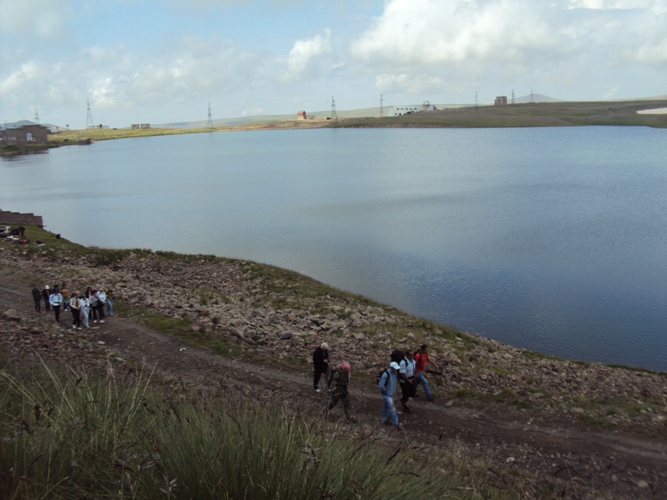
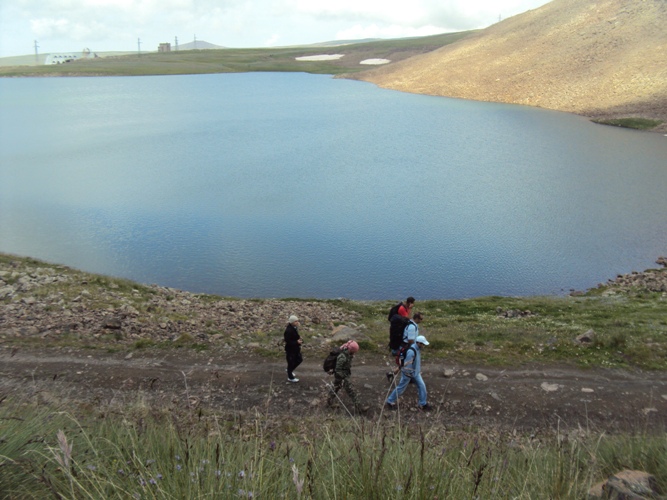
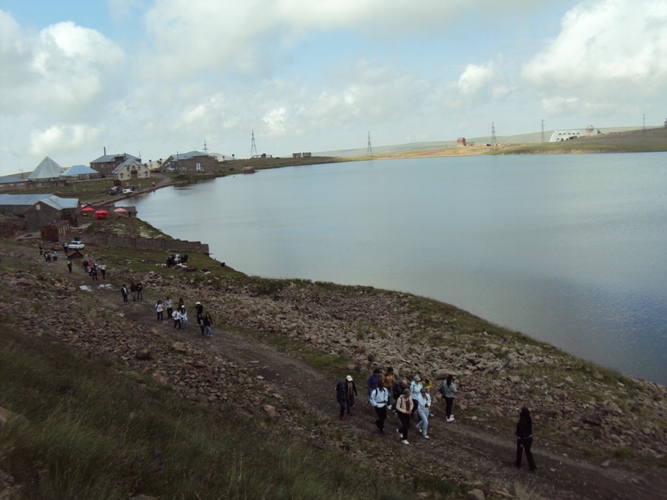
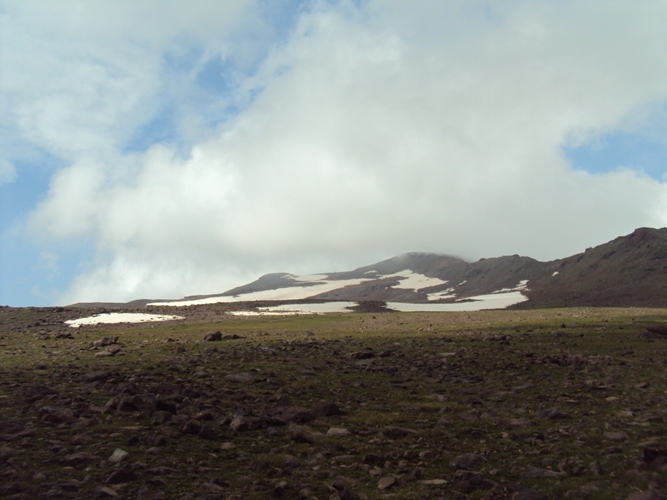
Vardani kamurj ka Karsum. Amroci masin shat teghyak mardu hartsretsi, inq@ nuynpes teghyak cher. Hnaravor a amrotsi anun@ urish ban a, isk Vardani amrots kochvum a teghabnakneri koghmits?
-
sULTAN eRDOGAN; DIPLOMATIC SWINDLER
Aratta-Kingdom replied to Aratta-Kingdom's topic in International
The genetic garbage has lost the touch with the reality: WHO IS THE NEXT? news.am July 29, 2011 Armenia The mainstream media focused attention on Turkish Prime Minister Recep Tayyip Erdogan's "complex" about apologies". In fact, this year the Turkish PM demanded "apologies" from Germany, Israel and Armenia. 1.Germany "Turkish Prime Minister Recep Tayyip Erdogan demanded an apology from German Chancellor Angela Merkel on Friday over recent accusations that Turkey is not taking sufficient steps toward resolving the Cyprus issue," Hurriyet Daily News and Economic Review reported. "It is meaningful that the Chancellor of Germany carries her populist politics into Cyprus. Those statements do not give the impression of a leader with vision. We say that Merkel should revise her knowledge of history and apologize," Erdogan told his deputies during a Justice and Development Party, or AKP, parliamentary group meeting in Ankara." "The harsh comments came after Merkel described the Turkish Cypriot presence in northern Cyprus as an "invasion" during a recent visit to southern Cyprus. She criticized Turkey and Turkish Cypriots for not doing enough to reach a deal with Greek Cypriots." "Merkel's statements not only hurt but they also reflect a lack of historical knowledge and contradict statements she made in the past," Erdogan said. "Merkel showed how unfamiliar she is with Cyprus dispute." Stressing that the European Union and the United Nations were ultimately responsible for the negotiations, Erdogan said they were still looking for a criminal and blamed Turkey. However, Turkey would not give away a single gram of northern Cyprus, he said. 2.Israel "Relations between Israel and Turkey continue to be cold as the report on what happened on board of the Turkish-flagged Mavi Marmara vessel pertaining to a flotilla that was heading for Gaza with humanitarian help is about to be read on the floor of the United Nations," Metrolic reports referring to the confrontation between Israel and Turkey. In spite of rumors about secret talks between Turkish and Israeli leaderships to the purpose of thawing relations between two state that used to have excellent relations, in a speech delivered on Friday to the parliament Turkish Prime Minister Tayyip Recep Erdogan gave no sign of softening, and restated that there would be no improvement in the relations between the two sides unless Israel presented an apology for the loss of nine Turkish lives in the clash with the Israeli Defense Forces during the boarding, on May 30, 2010. Erdogan said that normalization was "unthinkable," unless the Israelis apologized for the "illegal act which is against international law," until payment was made to the relatives of those killed in "this atrocious event," and the embargo on Gaza was lifted. The raising of the stakes by adding the lifting the embargo on Gaza proves that Turkish Prime Minister feels that Israel may be in a difficult spot right now and could consent to at least some of these demands, though it is unconceivable that it would lift the blockade on Gaza. Or maybe not. Erdogan's remarks in parliament come at the end of an European tour Benyamin Netanyahu took to Europe, during which he visited France, UK, Germany and two states in Eastern Europe: Romania and Bulgaria. While in Bulgaria, Netanyahu practically promised the Bulgarians something as big as a "merger" between the economy of Israel and that of their country, signing more economic treaties and sealing off more deals than Bulgarians had ever dreamt of. Did he send a message to Ankara by proclaiming Bulgaria, one of the poorest countries within the European Union, the strategic partner of Israel in the Balkans, a place where Turkey has huge interests, or was he just courting the Bulgarians for their vote in the U.N. General Assembly in September in case Palestinians want to proclaim a state of their one and demand official recognition? Or was he simply interested in putting Bulgarian food on the table of the Israelis? Could have been all three combined. Israel agreed last year to pay compensations to the families of the people killed in the IDF's raid, and even to express regret for the loss of their lives, but under no circumstance did it agree to offer an apology, which would be in their eyes admitting that they had been acting outside the frame of the international law, which they have systematically denied. Since the beginning of the inquiries in the case Israel affirmed that the actions of the IDF were perfectly legitimate, though unfortunately they resulted in loss of human lives." 3. Armenia "Israel can take solace that it is not the only country in the world from which Turkish Prime Minister Recep Tayyip Erdogan is seeking an apology: On Wednesday he demanded one from Armenia as well," The Jerusalem Post reports. "The Turkish news website Today's Zaman, reporting on Erdogan's current trip to Azerbaijan, quoted him as saying that Armenian President Serzh Sarksyan should apologize for calling on Armenian school children to occupy eastern Turkey. Sarksyan, asked by a student if Armenia would get back its "western territories" along with Mount Ararat - an area of great historical significance to Armenians - that's now in Turkey, replied that "it depends on you and your generation. I believe my generation has fulfilled the task in front of us; when it was necessary in the beginning of the '90s to defend part of our fatherland - Karabakh - from the enemy, we did it. I am not telling this to embarrass anyone. My point is that each generation has its responsibilities and they have to be carried out with honor. The statement infuriated Turkey. According to Today's Zaman, Erdogan said Sarksyan's behavior was a provocation and an attempt to fill youth with hatred, which he said would lead Armenia's youth into "darkness." "There cannot be such diplomacy. Sarksyan has made a very serious mistake.... He must apologize," Erdogan was quoted as saying. Erdogan's demand for an Armenian apology comes just a few days after he threatened Israel with a "Plan B" - a further downgrading of ties - if it did not apologize for last year'sMavi Marmara incident. "What we see here is a pattern developing," one Israeli diplomatic source said of Erdogan's most recent demand for an apology. "Who is going to ask Erdogan to apologize for Turkey's occupation of northern Cyprus?" Meanwhile, Prime Minister Binyamin Netanyahu's senior forum of eight ministers - a body known as the octet - met on Wednesday, but, according to government officials, did not deal with the Mavi Marmara issue because Strategic Affairs Minister Moshe Ya'alon was not present. So, who is the next in the Turkish premier's "list"? -
Arpa jan, mi qani nkarner vor khost ei tvel. Iroq pressure shat a aragatsi vra, u lij@ ijnel@ shat djvar petq a lini. Did I answer to you question?



-
amena lav makhtanqnerov, shnorhavorum em yerkusit tsnndyan or@.
-
knerek krknaki posti hamar. arajin@ aneluc heto indz tvats vor cher statsvel. MosJan, vor khndrem ays mek@ kjnjes? nakhapes mersi Ur welcome Arpa jan. Lij@ nkarel em, bayts aydqan hajogh chi. Yerkushabti kam yereqshabti lji mi qani nkar estegh kdnem. Tpavorutyun@ drakan er. Lji shurj@ arandznapes ban chka. Geghecik tsagikner en ajum dznhalic heto.
-
Ur welcome Arpa jan. Lij@ nkarel em, bayts aydqan hajogh chi. Yerkushabti kam yereqshabti lji mi qani nkar estegh kdnem. Tpavorutyun@ drakan er. Lji shurj@ arandznapes ban chka. Geghecik tsagikner en ajum dznhalic heto.
-
Jamanaki zgacum@ korcrel einq Anoushik jan)) Et amboghj gegheckutyunov tarvats, nuynisk djvarutyun@ u karkuti tak qaylel@ hajeli er tvum. Mersi MosJan. bari vayelum. Es shabatva verjum vardavari nkarnern em dnelu.
-
Gagatits






-
Vazgen Sargsyani razmakan instituti shrjanavartner@. Mezanic mi qani angam qarag hasan gagat@. ))Apagan vstaheli dzerqerum e

-
Haravayin Gagat




-
24-ը հուլիսի, 2011 թ





-
Armenia Concerned About Russian Migration Schem
Aratta-Kingdom replied to Aratta-Kingdom's topic in Republic of Armenia
Enough with blaming the others!!! People leave because their basic rights are violated. People leave because couple of bastards in Armenia have taken a role of "lav tgha", and dictate their way of life on thers. Serj@ Hayastanum darcel a toner@ haram anogh hayvan. Tonakatarutyunneri jamanak Serj@ u karavatutyan andamner@ amena lkti dzevov joghovrdi nerkayutyun@ anteselov poghocner, taratsqner, en pakum vor irants xozi ker-u-xum@ anen. Verjin@ vor yes tesa, u vidyoi vra ardzanagrel em, Sardarapatum er. Vostikanner@ mardkanc chenin toghnum tangarani taratsq@ gnal vorovhetev Serj@, varchapet@, katogikos@, u eli urishner taratsqi "obektum" "live yerajshtutyan" nerqo hac ein utum. Sardarapatic durs galuc sranc meqenanneri sharasyun@ mardkanc koxqic aynqan arag er gnum, vor yete mardkanc nerqin vax@ chliner es bashi-bozukneric heru mnalu, hastat mi qani hogi meqenai tak knknein. Qaghaqakirt voch mi yerkrum naxaghan, varchapet@, u "hoqevor arajnord@" irenc aydqan lkti chein karogh pahel. -
Armenia Concerned About Russian Migration Schem
Aratta-Kingdom posted a topic in Republic of Armenia
http://www.azatutyun.am/content/article/24273966.htmlThe Armenian government has told Russian authorities to stop encouraging and helping families in Armenia to migrate to Russia, Prime Minister Tigran Sarkisian revealed on Friday. Sarkisian referred to the Russian government’s Compatriots program that offers employment, accommodation and financial benefits to married residents of former Soviet republics willing to settle in Russia. It is designed to address the country’s serious demographic problems. The Russian Federal Migration Service (FSM) began operating the program in Armenia in 2009 and has reportedly attracted hundreds of Armenian families since then. Its activities are sparking a growing uproar from local opposition politicians, public figures and media worried about the continuing outflow of people from Armenia. Some of them have demanded that the authorities in Yerevan ban the FSM scheme in Armenia. According to Sarkisian, the authorities share those concerns. The prime minister said President Serzh Sarkisian instructed him to raise the matter at a recent meeting of a Russian-Armenian inter-governmental commission on bilateral cooperation that was held in the southern Russian city of Rostov-on-Don. “We brought our Russian partners’ attention to the fact that that program must not be implemented in the Republic of Armenia with those standards,” said Tigran Sarkisian. “This issue will be the subject of inter-governmental discussions.” “We have to solve this issue at the political level,” he told a group of prominent Armenian writers, academics and other intellectuals at a meeting held in Oshakan, a historic village in central Aragatsotn province. Some of those intellectuals signed earlier this month an open letter to the government urging it to do more to keep Armenians from leaving their country for mainly economic reasons. They echoed opposition claims that the scale of the emigration has increased of late. President Sarkisian disputed those claims this week at a special meeting with top state officials, including the prime minister, that discussed the issue. He said most of the tens of thousands of people leaving the country each year, mainly for Russia, are seasonal workers that eventually return home. Serzh Sarkisian admitted at the same that a lack of economic opportunities and the resulting emigration remains a serious problem in Armenia. He instructed government bodies to propose more measures to tackle it. Armenia had about 4 million residents by the time the Soviet Union collapsed in 1991. At least one-quarter of its population has since emigrated in search of employment abroad. -
http://news.am/eng/news/68905.html NINGBO. - The Armenian team beat Indian chess players (2.5:1.5) in the 6th round of the World Team Chess Championship 2011 in Ningbo, China. Levon Aronian won the only victory in the match with Indians and Sergey Movsisyan, Vladimir Hakobyan and Gabriel Sargsyan ended their matches in a draw. The Armenian team tops the standings with 10 points. Chief rivals of Armenians in the championship, Russian and Hungarian teams, ended their matches in draws and have 8 points each. Match between Israel and Azerbaijan also ended in a draw, 2:2. The Chinese defeated the Egyptian team 3.5:0.5. In 7th tour Armenia will compete with Hungary.
-
TIME TO CONTAIN GEORGIAN ARROGANCE By Edmond Y. Azadian AZG DAILY 22-07-2011 His Holiness Karekin II had been planning to visit Georgian Armenian communities for a long time. His visit would be only the second one since Khrimian Hairig, Catholicos of all Armenians, visited more than a century ago. On again and off again, the visit finally happened when Georgian Church authorities, and especially Georgian Patriarch Illya II, extended the invitation, when all his traps and plots were in place to intimidate his Armenian counterpart. Georgians are known to be fun-loving people, always at the expense of others. During the last several centuries, Armenians built their capital, Tbilisi, which in the 19th century had become the Paris of the Caucasus. When the Soviet revolution came to be, it was a very handy excuse to get rid of the capitalist class ~W mostly Armenian ~W and they took over what that class had built in terms of culture, architecture, material wealth and religious institutions. Georgia is the only other Christian nation in the Caucasus, but it has always been envious of the Armenians and thus is always plotting against Armenia, in collusion with its enemies. It turns out that that competitive envy had also permeated the Georgian religious order, beginning from their Patriarch Illya II down to the ordinary priests usurping Armenian churches, all along and trampling human and minority rights. In Georgia, Armenians are mostly concentrated in the capital Tbilisi and the Javakhk region. During the Soviet period and subsequent independence years, Georgians have repressed Armenians into becoming a docile community. Although the Armenian government tries to help fellow Armenians in Georgia, it has to do so with kid gloves, because Armenia~Rs economic lifeline to the world beyond goes through Georgia. In addition, gas and oil from Russia pass through the Georgian territory. The Tbilisi government has deftly used those factors every time it has decided to exert political pressure on Armenia. Javakhk is an Armenian territory, which has fallen under Georgian administration by an accident of history, during the 1918-1920 period. The Georgians have used tacit and not-so-tacit methods to depopulate the region of Armenians. The catholicos~Rs visit this month brought out the true colors and intentions of the Georgian clergy. To begin with, the Georgian Patriarch accompanied Karekin, under the pretext of hosting him on Georgian land, but in reality, he tried to steal the show, because Armenians all over that land gave a warm reception to the Armenian pontiff. His Holiness also raised some outstanding issues between the churches: confiscation of Armenian monasteries and places of worship and above all the status of the Armenian Church in Georgia. As of today, the Armenian Church does not have a legal status in that country. The government gets away with murder, thumbing its nose at Armenian demands. It is ironic that the European Union, the US State Department and human rights groups are at Armenia~Rs back to accept and register all kinds of esoteric sects which wreak havoc in Armenia, undermining the authority of the Armenian Apostolic Church and infiltrate the military to incite soldiers to give up arms against the enemy. Armenia is criticized as being a partially free country, whereas Georgia enjoys impunity though it has refused to recognize any church as a legal entity, because Georgia is the West~Rs spoiled brat in the Caucasus. During His Holiness Karekin~Rs visit, a joint communiqué surfaced in Tbilisi, with preposterous demands. The Armenian side was quick to clarify to the public that it has not signed such a communiqué. The outrageous demand in that communiqué claimed parity between the two churches, meaning, whatever status the Armenian Church enjoys in Georgia, the same status should be accorded to the Georgian Church in Armenia. Georgian clergy have confiscated Armenian churches in their country, whereas no Georgian churches exist in Armenia, even if the Armenian clergy harbored the same intensions versustheir Georgian counterparts. Despite this fact, the Georgian Patriarch announced a few years ago the formation of the Diocese of the Georgian Church in Northern Armenia, where very few Georgians live and no churches exist. Adding insult to injury, the Georgian Patriarch made some derogatory remarks about our Catholicos, dispensing advice that he should wait to have more experience and that change cannot be brought overnight, forgetting that he needs to learn some common courtesy and religious conduct and not to behave like a Georgian guindo. Although the Catholicosate rebuked the remarks of the Georgian pontiff, further action is needed to tame the Georgian arrogance. In the first place, the European governments who request compliance from Armenia must be alerted. If necessary, legal action needs to be taken. Armenians in Javakhk have limited resources and the Armenian government is in a precarious situation and realizes the cost of rocking the boat. Therefore, it is incumbent on diaspora organizations ~W and especially religious institutions ~W to assume the responsibility and to meet the challenge. Washington, the patron saint of Georgia, has to be apprised of the religious intolerance and abuse of human rights rampant in that country. In this instance, since the issue is mostly religious in nature, both the Diocese and the Prelacy can come together to draft a position paper and appeal to our legislatures who have become so generous in spoiling Georgia in order to spite Moscow. In addition, letters, e-mails and phone calls should inundate the State Department and congressional offices. Sitting idly will not change the desperate situation of the Armenians in Georgia. This boundless arrogance has to be contained.
-
The Jewish Lobby & Armenian Genocide Bill
Aratta-Kingdom replied to Aratta-Kingdom's topic in Genocide
GENOCIDE EXPERT CALLS ON ISRAEL TO PUT ARMENIAN SUFFERING BEFORE POLITICS By Raphael Ahren Ha'aretz http://www.haaretz.com/weekend/anglo-file/genocide-expert-calls-on-israel-to-put-armenian-suffering-before-politics-1.374590 July 21 2011 Israel Turkey vociferously objects to calling the events between 1915 and 1923 during which Ottoman forces killed more than a million Armenians as genocide. If Israel recognizes the Turkish genocide of over 1 million Arrenians in the near future, it may be largely due to the decades long efforts of American-born scholar Israel Charny. But Charny, now living in Jerusalem, is wary of a renewed push for detente between Israel and Turkey, which may torpedo his campaign for recognition. "The whole business of rapprochement with Turkey is a game that politicians should and must play, because we want to get out of that process as much as possible," Charny told Anglo file this week. "But I don't think it should be done with the illusion that we're dealing with anything but a totalitarian, dangerous government. I don't think we should ever compromise again on the ethical principal whether to deny the Armenian genocide or not - that should not be a basis for the attempt to remarry after the divorce." Turkey vociferously objects to calling the events between 1915 and 1923 during which Ottoman forces killed more than a million Armenians as genocide. Israel, which considered Turkey an important regional ally until recently, never officially recognized the genocide. But after bilateral relations cooled down in recent years, especially after the last year's flotilla to Gaza, during which Israeli troops killed nine Turks - the demand to recognize the Armenian genocide gained strength. The Knesset's tackling of the issue represents the fruition of decades of work by Charney, the longtime director of the Institute on the Holocaust and Genocide in Jerusalem. In May he received a prize for his work fighting for the recognition of the Armenian genocide by the southeastern European country's president. "Professor Charny is a very fair person who stand on his principles - there is no one like him," said Georgette Avakian, the leader of the Jerusalem-based Armenian Case Committee, adding that if Israel ever recognized her people's suffering, it would to a great extent be thanks to Charny. "He is one of the few people in the world who really look for the truth," she said. Charny, who was born in New York, co-founded and presided over the International Association of Genocide Scholars. "Professor Charny is a true pioneer in the field, he is probably the first to introduce the people to comparative genocide studies, which includes recognition of the scope of the Holocaust but not forgetting about the suffering and genocides of other people in the world," said Marc Sherman, the New York-born director of information services at Jerusalem's Institute on the Holocaust and Genocide. In the past, when Israel enjoyed better relations with Turkey, Charney often fought for recognition of the genocide, against Jerusalem's wishes. In 1982, he organized in Tel Aviv the first international genocide conference that featured Armenian speakers, Sherman said. A few years later, after state TV was pressured not to air a film about the Armenian genocide, Charny arranged a private screening in a Jerusalem cinema. He also testified against revered American-Jewish historian Bernard Lewis, who was on trial in France for denying the genocide. "Charny never backed down from standing up and confronting the denial of the Armenian genocide," Sherman said. But Charny does not deny Jerusalem's need for realpolitik. The Knesset discussed recognition of the genocide for the first time on May 19. On June 29, MK Arye Eldad introduced a bill to declare every April 24 Armenian Genocide Remembrance Day. His bill was rejected but will be discussed, together with a possible official recognition of the genocide, by the Knesset's education committee. However, no date has been set yet for the discussion, the committee's spokeswoman told Anglo File. It is unlikely this will happen before the Knesset goes into summer break next month, she said. "I totally understand that the people who run our country periodically have to make decisions that on the surface are not ethical and of the highest values because there are other value issues that take precedence. The survival of Israel absolutely is first priority," he told Anglo File in his book-cramped study in Jerusalem's Baka neighborhood. "But I've got lines to draw." Despite legitimate political, economic or military concerns, Israel must not continue to deny the suffering of another people, if only because of its own suffering, Charney said. "When it comes to Israel's denial of the Armenian genocide, I ask first of all: what would our government's and our people's reaction be to any government that denies the Holocaust?" he said. A clinical psychologist by profession, Charny became interested in genocide studies in the 1960s after a having a dream. "I wake up and the dream has led me to very powerful emotional experiences, including rage: How could they do what they did to our people in the Holocaust? How could human beings exercise such a beastly cruelty?" he recalled. "Then I had a horrible realization: I was a specialist in human behavior, accredited from the best American educational and clinical systems, and I never learned one miserable word about human cruelty and evil." It was then that Charny decided to dedicate himself to the study of genocides. "The first thing I did was I wrote Yad Vashem and I asked them to direct me to books in their library about the psychology of the Holocaust and genocide. The answer was, we're so sorry, we have no such books." Since then, Charny has written and edited more than a dozen books on the topic, three of which won the American Library Association's Outstanding Academic Book of the Year award. His latest work, "And You Must Destroy the Evil in You: We Are the Human Beings who Commit Holocaust and Genocide," came out this week in Hebrew. -
WONDERKID SEEKS TO WIN OLYMPIC BERTH Hurriyet Daily News July 21 2011 Turkey Hailed as one of the most promising athletes in his generation, 18-year-old Toros Pilikoglu wants to duplicate the determination of his Armenian ancestors and want to represent Turkey in the 2012 Olympics in London Toros Pilikoglu, a Turkish athlete of Armenian descent, has many records in the short long jump and sprint races in youth categories. Toros Pilikoglu wants to represent Turkey in the Olympics, just like his Armenian ancestors did a century ago. The 18-year-old sprinter and long jumper, a Turkish citizen of Armenian descent, has set his sights on the 2012 Olympic Games in London. If he can win a berth at the biggest event in world sports, he will being following in the footsteps of two Armenian athletes who competed in the 1912 Swedish Olympics to represent the Ottoman Empire. Pilikoglu has several national records to his name and has been called one of the hottest athletes of his generation. He plays down the accolades, however, saying he is only getting started. "I have done nothing yet; I am aiming for more. It is [a source of] great pride for me to represent Turkey. My entire family was born on this land; I feel I belong to this land," the athlete told the Hurriyet Daily News. Turkey was represented by two Ottoman citizens of Armenian descent during the 1912 Olympic Games in Stockholm. Athletes Vahram Papazyan and Mıgırdic Mıgıryan, however, had little support from the state and participated in the Olympics through their own means. "I am also trying to do what they did 100 years ago," said Pilikoglu, who holds numerous national and international titles and has been dubbed the "Flying Man." Also like his predecessors, though, Pilikoglu faces financial challenges. He said state grants provided to successful athletes in Turkey are insufficient, making it more difficult for them to compete in international contests. Pilikoglu's achievements are backed by Aram Kalender, an Armenian businessman, according to the trainer and school teacher who had been working with the young athlete for the past 11 years. "Toros has attained incredible achievements despite his young age. There has never been a track and field athlete who participated in the Olympics at the age of 18 in Turkey's history. We are expecting support from the state," said trainer Hakan Gunartan. He added that the government provides 500 Turkish Liras worth of grants each month to successful athletes for their dietary needs, a figure the trainer said was insufficient. "Each athlete has [to follow] a special dietary procedure; that is a great expenditure. Health expenses are another important issue. Our athletes are unfortunately deprived of this right," Gunartan said. "I cannot cover my physiotherapy expenses. I try to heal myself at home. The health expenditures of successful athletes around the world are taken care of by their countries," Pilikoglu said. The athlete's track titles include first place in the 23rd Junior Games in Finland, where he completed the 100-meter event in 11.88 seconds, and a Balkan championship where he finished the 100-meter event in 10.77 seconds. "Toros was quite different than other students; he was full of beans, he was ambitious. I used to think this kid could make it big, and that's what happened. He became the Turkish champion with 12.0 seconds in the 100-meter race for [runners] 15 years old and under, the first competition he entered," Gunartan said. Pilikoglu was barely 12 years old when he won that title. Gunartan discovered Pilikoglu at the age of seven, while he was working at the Kalfayan Private Primary School owned by the Armenian community in Istanbul's Uskudar district. "I, too, was a skilled athlete, but I could not transcend Turkey's borders as I lacked a guide, and my achievements have remained at a national level. I am transmitting all my experience unto him, I am showing him the way," Gunartan said. "I want him to succeed where I could not succeed myself - something he has already done. Now our goal is the Olympics." Pilikoglu said running is his passion and that he takes great care in his personal life not to fall out of form, refraining from drinking alcohol and partaking in nightlife as many of his peers do and instead leading a life full of sports. "This is a matter of choice, I do not feel as if I am missing anything. Running is the only important thing for me," he said. "I become completely severed from life when I am running; I hear no sounds. I lock on my goal, head on. I would not succeed if I heard or thought about [anything else]." Participating in international competitions and winning titles there has boosted Pilikoglu's self-confidence. "I would like to reach overseas in the future," he added. "I would like to receive training abroad. This will develop my skills in many respects."
-
TURKISH COMPOSER OF ARMENIAN ORIGIN CHANGED NAME TO AVOID CENSORSHIP news.am July 21 2011 Armenia Cenk Taskan, whose real name is Majak Tosikyan, is a significant figure in Turkish music world, Nouvelles d`Armenie informs. He worked with many Turkish famous singers during 40 years of his career. He has recently worked on the album of Sibil Pektorosoglu, which was released in Armenian. He started his career as a guitarist in 1965. Critics consider his album Bir Nefes Gibi (Like One Breath) as one of the best music albums in the history of Turkish pop-music. Before 1990s, he suddenly decided to move to Canada and returned back to Turkey in 1997. "I changed my name to avoid the censorship by Turkish state channel TRT. As my name [of Armenian origin] could make them disapprove our songs," he said in response to the question why the composer decided to change his name. The composer believes that Turkey progressed and currently does not face such problems. No one is interested in the identity now, what is important is the quality of the work.
-
Դսեղ -Հ. Թում
Aratta-Kingdom replied to Aratta-Kingdom's topic in My Visit Or Memories Of Armenia
You are welcome L.K. . Our homeland is a beautiful place. Please do visit us, whenever you can. khndrem MosJan. qez shat lav em haskanum. -
Դսեղ -Հ. Թում
Aratta-Kingdom replied to Aratta-Kingdom's topic in My Visit Or Memories Of Armenia
1. Giqori derakatar@ irenc tan bakum 2. Hayr@ 3. Spitak tut hyurasirecin ))))