onjig
-
Posts
1,644 -
Joined
-
Last visited
-
Days Won
134
Content Type
Profiles
Forums
Events
Gallery
Everything posted by onjig
-
Greetings Yervant, This is oak Leave Sumak, the flowers were light in color: white or yellow. I didn't think to taste the flowering heads, being busy. The exterior of the bean or seed has that flavor, I'm hoping that can be used, if it's the flower, and you may be right, it's next year. Thankyou,
-
Yes! It would be better.
-
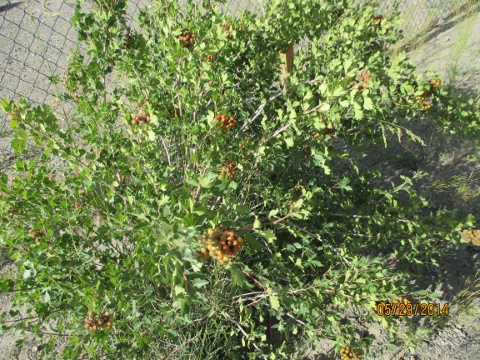
I've planted Sumak, you know for the lemony flakes. The plants have berries, not ripe, if you roll a berry around on your tongue you'll get the taste, but the flesh of the green seed doesn't, yet, have the taste. Question: Is it the pith of the dried ripened seeds that is used? Do you know? I guess it must be.
-
Long live AVO! Thank God we were given this humble, great man. He is ours forever!
-
In 1974-75, Azeri Academy of Sciences held excavations in a cave near Shushi, with the items found dating back to the earlier period than mentioned above. All of those items are now displayed in Baku as samples of "Albanian culture," Harutyunyan said. With no mention that the Caucasian Albania was Armenian.
-
The Armenian boys were even dubbed "The Terrible Turks" before Sophia Prather set the coach and the media straight. (The Turks, as everyone knows but some fail to recognize, committed genocide against the Armenian people). ------------------------------------------------------------------------------------------------------------------------ Watch and see, this will be soften or edited out, maybe by this lady's request. We'll see.
-

Changes Arm. Women & Men Would Like to See In Each Other
onjig replied to Em's topic in Gender Issues
Good question! -
You think muslims are all devout, like in the movies? Believe it or not all Hye know the God, some think they are too smart to have faith.
-
Greetings Arpa, Is anyone suprised that he was lying? During the first election these Armenian organisations called me encouraging me to vote for the muslum, marxist, m&8%% ##@^&*^. I told the one young fellow, when he called, This is a Marxist Muslum, who will he agree with? His answer was "you think he is?" pause "He might be." One of the first things Husain Jabama did was go to Turkey and lick around. We all should have seen this.
-
a

-
Sisters Yerazel and Yerani have a number of animals, these are the youngest.


-
We would have to look at a map. What an interesting and sometimes precarious route that would be. Is there a ferry that can be taken across to Georgia I wonder. It would have to be Navibulgar, Bulgaria to Georgia, all ships take the long route north via Ukraine. The trade name of Navibulgar's ferry line forwarding branch is FERRYSPED. It provides a "door to door" carriage of all types of cargo (railway rolling stock, trucks, and containers, passengers, deck cargo and cars) to and from Ukraine, Belarus, Kazakhstan, Uzbekistan, Georgia, Armenia, Azerbaijan, Iran, Afganistan, Turkey, Greece, Macedonia and Yugoslavia, using railway, maritime and auto transport. Then the bit you probably want is their schedule PDF which lists the dates they're sailing for the next two months. I'd suggest you ring them / email them (details at the end of the schedule) and ask for the departure timings on the days you're considering going.
-
Very good!
-
South Dakota HOUSE CONCURRENT RESOLUTION NO. 1020
onjig replied to Yervant1's topic in Events & Action Alerts
I sent the following to the Email address of South Dakota House members describing her as an Eye witness. BARONESS COX REVEALS BAKU'S TRUE FACE DURING DEBATE ON UK-AZERI TIES PanARMENIAN.Net - Member of the UK House of Lords, chair of the British-Armenian All-Party Parliamentary Group Baroness Caroline Cox delivered remarks during a debate on UK's relations with Azerbaijan and the South Caucasus. "I have visited the region 78 times, many during the war against Nagorno Karabakh. I regret that my contribution to this debate will be unpopular, because it is critical of Azerbaijan, but it is based on first-hand evidence," Baroness Cox said. "I begin with a brief reference to aspects of recent history relevant to current issues. I visited Azerbaijan in 1991, when I met the then president and political leaders. I was dismayed by the explicit commitment to ethnic cleansing of the Armenians from Nagorno Karabakh. I also visited Karabakh then and met Azeris living in homes which had recently been owned by Armenians who had been evicted by Azerbaijan's well documented policy, Operation Ring, in which Armenian villagers were surrounded by Azeri troops who killed, tortured and drove villagers off their land," she continued. "The Armenians were the primary victims as they had already been victims in the massacres in Baku and Sumgait. Then Azerbaijan unleashed full-scale war. I witnessed 400 Grad missiles daily raining onto Karabakh's capital city, an aerial bombardment of civilian homes with 500 kilogram bombs. I also witnessed war crimes perpetrated by Azerbaijan on Armenian civilians at Karabakh, such as the cold-blooded massacre of villagers in Maragha. I was there hours afterwards and saw corpses whose heads had been sawn off and burnt, mutilated bodies. I visited Khojaly and can testify that the tragic events were not as portrayed by Azerbaijan-a massacre of Azeris by Armenians. Independent journalists and Azerbaijan's former President Mutalibov have publicly come to the same conclusion," Baroness Cox emphasized. She also noted that the Armenian forces' taking control over the territories surrounding Nagorno Karabakh was not aggressive land grabbing, but essential for survival, as they were used as bases for constant shelling of towns and villages inside Karabakh. "I was there when one ceasefire was broken by Azerbaijan, with renewed bombing from Azeri bases in these lands," she said. "This recent history is relevant to current concerns as the 1994 ceasefire is precarious. There is an urgent need for peace for the peoples of Azerbaijan and Armenia and because the peoples of the south Caucasus do not want another destabilizing regional war. However, Azerbaijan's continuing hostile policies are detrimental to attempts to reach a solution to this semi-frozen conflict. For example, the noble Lord, Lord Laird, mentioned the case of Ramil Safarov, the Azeri military officer who used an axe to murder an Armenian officer in his sleep while both men were attending a NATO course in Budapest in 2004. Safarov was arrested, convicted and sentenced to a lengthy term of imprisonment. But, when Hungary repatriated Safarov to Azerbaijan, on the understanding that he would continue to serve his prison sentence, he was released from prison and welcomed as a hero. According to the Economist in September 2012, this led to a new war of words in one of the world's most volatile regions," she said. "Patrick Ventrell, spokesman for the US State Department, said that the United States was extremely troubled by the pardon of Safarov and would be seeking an explanation from both Budapest and Baku. Russia, involved in trying to ease relations between Armenia and Azerbaijan, said that the actions of the Hungarian and Azeri Governments contradicted internationally brokered efforts to bring peace to the region. May I ask the Minister what representations have been made by Her Majesty's Government to Azerbaijan concerning the release and the honouring of the convicted murderer Safarov? The Economist also raised questions about the EU's credibility when it pledged ~@19.5 million to reform oil-rich Azerbaijan's justice and migration systems. Since 2006, Azerbaijan's economy, with its vast oil and gas reserves, has nearly tripled to $62 billion. May I ask the Minister what the EU's justification was in giving ~@19.5 million to such a wealthy country? Moreover, there is widely-held concern over Azerbaijan's massive investment in its military arsenal-a 20-fold increase in seven years. Apart from expenditure on arms, in a nation where many still live in poverty, there is deep anxiety over the propensity to renew war with Nagorno-Karabakh. This danger is exacerbated by Azerbaijan's constant use of belligerent and hostile propaganda, which is not conducive to confidence-building or effective peace negotiations," the Baroness noted. Finally Baroness Caroline Cox referred to Azerbaijan's disturbing record on human rights, particularly on freedom of the press and religious freedom. "No country has an interest in other countries, only interests-and we have oil interests in Azerbaijan," she concluded. "Azerbaijan pours massive funds into propaganda, disseminating positive images of its progress while trying to prevent access to Karabakh by intimidating potential visitors who wish to see the situation there for themselves. After one of my visits in recent years, an article appeared in an Azeri newspaper, entitled "Shoot the Cox!". Parliamentarians visiting Armenia receive letters from Azeri authorities threatening to place them on a blacklist if they visit Karabakh. The British Ambassador is still not allowed to visit Karabakh, although the political and diplomatic representatives of other nations do so. Therefore, it is hard for the Armenians of Karabakh to have their story of Azerbaijan's policies told. I deeply regret having had to make such a critical speech. Of course, I can be accused of partiality, but if my contribution is partial, it is accurate, based on first-hand evidence and corroborated by many independent sources. I hope it is helpful to put on record some often untold aspects of the situation, because the search for a just and lasting peace can only be based on an understanding of historic and contemporary reality in all its multi-faceted complexity," she stressed. Like ThisEllal qan te nmanilQuoteMultiQuoteReport #2 onjig -
South Dakota HOUSE CONCURRENT RESOLUTION NO. 1020
onjig replied to Yervant1's topic in Events & Action Alerts
Survivors of Maraghar massacre: It was truly like a contemporary Golgotha many times over The ancient kingdom of Armenia was the first nation to embrace Christianity — in AD 301. Modern Armenia, formerly a Soviet republic, declared autonomy in September 1991 and today exists as a member of the Commonwealth of Independent States. There you find many of the oldest churches in the world, and a people who have upheld the faith for nearly 1,700 years, often at great cost. Nowhere has the cost been greater than in the little piece of ancient Armenia called Nagorno-Karabakh, cruelly cut off from the rest of Armenia by Stalin in 1921, and isolated today as a Christian enclave within Islamic Azerbaijan. Only 100 miles north to south, 50 miles east to west, there are mountains, forests, fertile valleys, and an abundance of ancient churches, monasteries, and beautifully carved stone crosses dating from the fourth century. This paradise became hell in 1991. Vying with Armenia for control of this enclave, Azerbaijan began a policy of ethnic cleansing of the Armenians of Karabakh, and 150,000 Armenians were forced to fight for the right to live in their historic homeland. It was a war against impossible odds: 7 million-strong Azerbaijan, helped by Turkey and, at one stage, several thousand mujahideen mercenaries. On April 10, 1992, forces from Azerbaijan attacked the Armenian village of Maraghar in northeastern Karabakh. The villagers awoke at 7 a.m. to the sound of heavy shelling; then tanks rolled in, followed by infantry, followed by civilians with pick-up trucks to take home the pickings of the looting they knew would follow the eviction of the villagers. Azeri soldiers sawed off the heads of 45 villagers, burnt others, took 100 women and children away as hostages, looted and set fire to all the homes, and left with all the pickings from the looting. I, along with my team from Christian Solidarity Worldwide, arrived within hours to find homes still smoldering, decapitated corpses, charred human remains, and survivors in shock. This was truly like a contemporary Golgotha many times over. I visited the nearby hospital and met the chief nurse. Hours before, she had seen her son's head sawn off, and she had lost 14 members of her extended family. I wept with her: there could be no words. With the fragile cease-fire that began in May 1994, we have been able to visit survivors of the massacre at Maraghar. Unable to return to their village, which is still in Azeri hands, they are building "New Maraghar" in the devastated ruins of another village. Their "homes" are empty shells with no roofs, doors, or windows, but their priority was the building of a memorial to those who died in the massacre. We were greeted with the traditional Armenian ceremony of gifts of bread and salt. Then a dignified elderly lady made a speech of gracious welcome, with no hint of reference to personal suffering. She seemed so serene that I thought she had been away on that terrible day of the massacre. She replied: "As you have asked, I will tell you that my four sons were killed that morning, trying to defend us — but what could they do with hunting rifles against tanks? And then we saw things no human should ever have to see: heads that were too far from their bodies; people hacked into quarters like pigs. I also lost my daughter and her husband—we only found his bloodstained cap. We still don't know what happened to them. I now bring up their children. But they have forgotten the taste of milk, as the Azeris took all our cows." How can one respond to such suffering and such dignity? Since the cease-fire, we have undertaken a program to supply cows. On our last visit, we met this grandmother, and, smiling, she said: "Thank you. Our children now know the taste of milk." Nagorno-Karabakh is a place where we have found miracles of grace. The day of the massacre I asked the chief nurse, whose son had been beheaded, if she would like me to take a message to the rest of the world. She nodded, and I took out my notebook. With great dignity, she said: "I want to say, 'Thank you.' I am a nurse. I have seen how the medicines you have brought have saved many lives and eased much suffering. I just want to say, 'Thank you,' to all those who have not forgotten us in these dark days." Baroness Caroline Cox April 1998 See also: "Ethnic Cleansing in Progress: War in Nagorno Karabakh" An official permission is given by Caroline Cox for the exclusive publicaiton on Sumgait.Info Top -
Sahak Sahakyan sing in the style of Marco Melkon who recorded in the early 1900s on 78rpm records. I guess that was his intent.
-
Sahak Sahakyan gam Soghomon Tehlirian?
-
Shish-in mech,,,,,,,,,,,,,,,,,,,,,,,,,,,,,,,,,,,,,,,,,,,,,,,,,,,,,,,,,,,, hankcheil........................... yev mornal!

-
There is a length of time the skins and stems will be left with the crushed grapes, no more, no less! In the crock with wood chips or in the barrel for this much time. Clean the cellar, my heart, it will look better.

-
It is good for children to see their parents make the road smooth in the storm. The Lord made Armenians particularly able for this. Nothing is a crisis. Myrig makes the meal bigger, Hyrig makes the house warmer. They see food taste better when we are together. They feel the load is lighter, we lift together. Glory to our God!
-
Two can live as cheaply as one............................but only half as long.
-
Astronomers recently discovered that all the stars in Terzan 7 were born at around the same time, and are about eight billion years old. This is unusually young for such a cluster. The shared birthday is another uncommon property; a large number of globular clusters, both in the Milky Way and in other galaxies, seem to have at least two clearly differentiated generations of stars that were born at different times. Come on, admit you have no idea.
-
I think that's a great picture. How the bell do they think they know, any date of any star. That's like a Hoja story: " If you don't believe it. measure it your self."
-
Here.