zagzig
-
Posts
20 -
Joined
-
Last visited
zagzig's Achievements

Newbie (1/14)
-5
Reputation
-
The pistol:
-
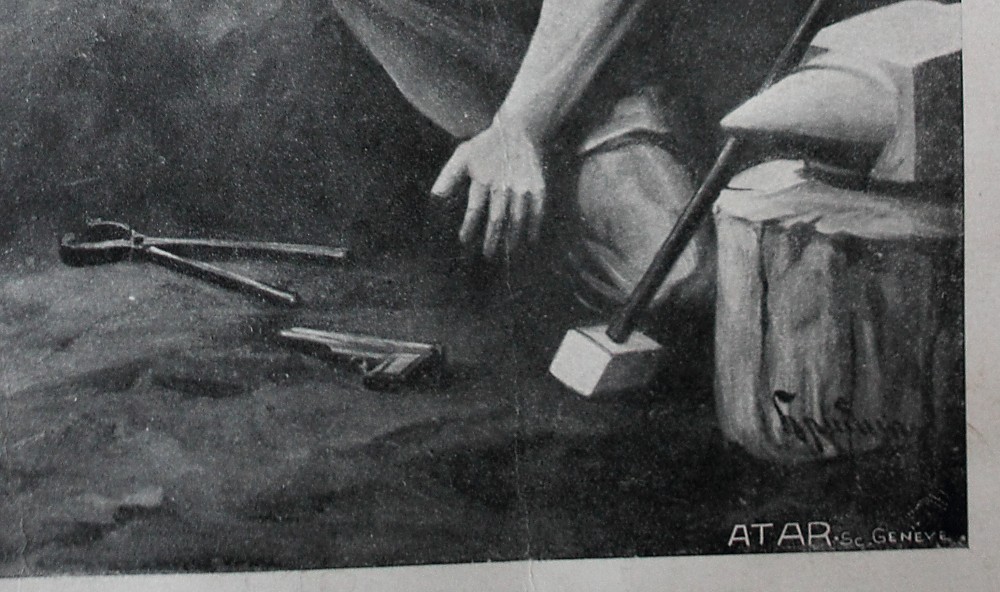
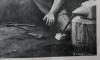
There is a pistol - just look. And I bet it is a mauser (or at least what the artist thought a mauser looked like). And what you said earlier "turned light into darkness" is an example of a metaphor, and is exactly the sort of meaning I want to tease out of the images - so I don't understand why you still don't seem to know what I'm aiming for in this thread? I don't think it is going to be possible to do anything useful with this thread. I won't add anything more to it until I see something added to it by someone else that I think advances it. So far, for me, it's been rather like, say, trying to discuss medieval Adam and Eve imagery and getting replies like "look at her tits!" or "Yes, God is great, he created the world" or "this is a factual image - are you implying that God did not create the world?".
-
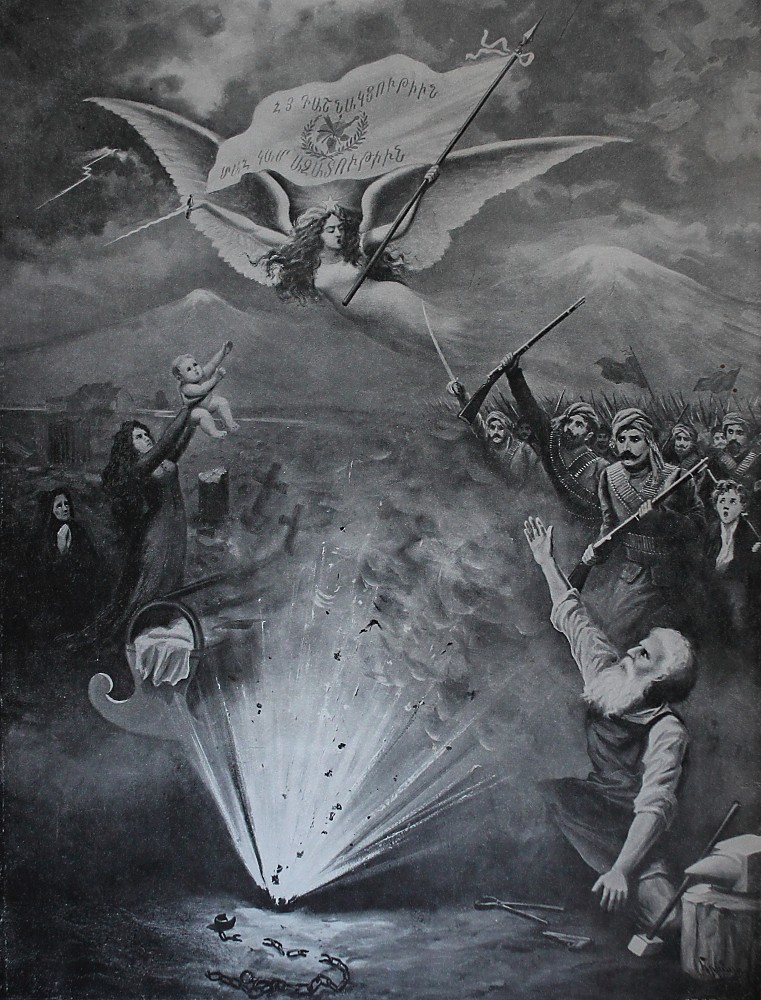
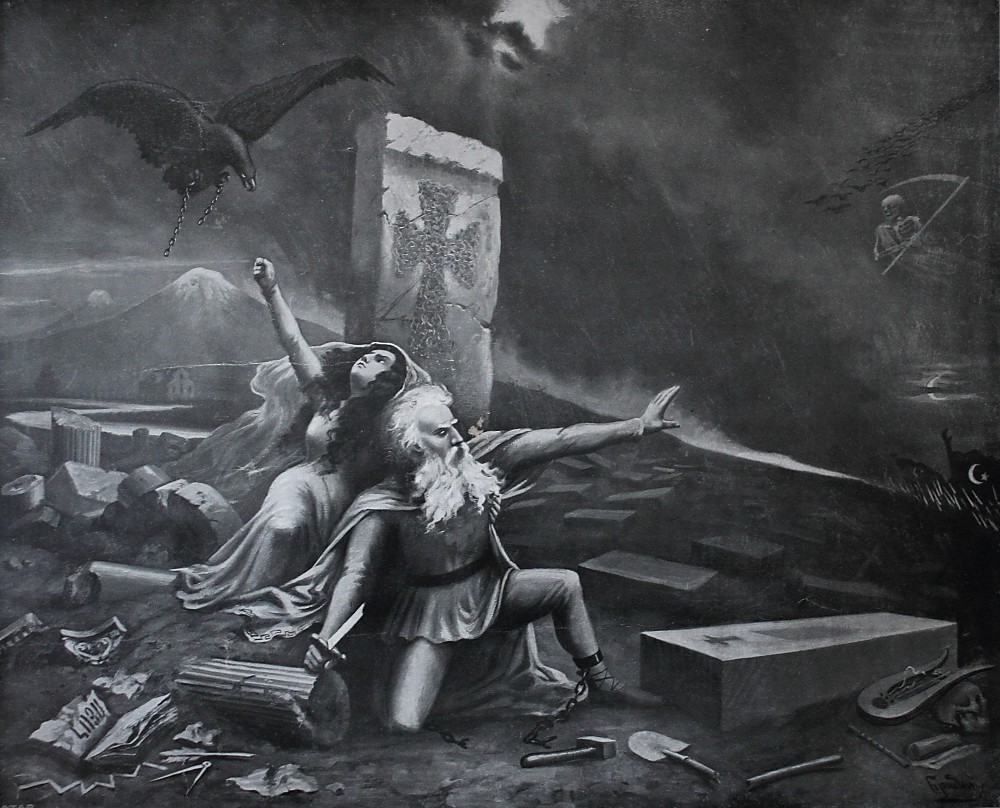
Huh - I pressed "like" when I meant to press "quote". Well, I liked the useful part - where you said what was on the book. I don't think you understood what I wrote about the purpose of this thread. The image IS propaganda: it is not depicting a real scene - it is entirely imaginary, deliberately unreal (note the dramatic sky and difference in level between the river and the slope up which the Turks advance), condensing beliefs and concepts into a message, and is full of tick-box images and metaphors designed to elicit in its viewers particular responses or prompt particular memories, or hark back to equivalent images used by other causes (I'm sure we could find similarities with images produced during the Greek war of independence).
-
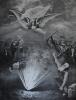
The first image must have created enough of an impression for it to be referenced again in this image. It is by the same artist, and the same printer, but is probably done at a later date. Maybe that book I mentioned would have some specific information about it. Now the Turkish hordes have been vanquished, driven off by armed fedayeen. The broken sword in the first image has been replaced by a pistol (see it beside his left hand). The overt Christian imagery in the first image - the gravestone with a cross - is gone. And above it all a winged figure holds an ARF banner, with the woman presenting her child to it (signifying the future?). Is the "explosion", just that, an explosive device, or is it a metaphor for something else?
-
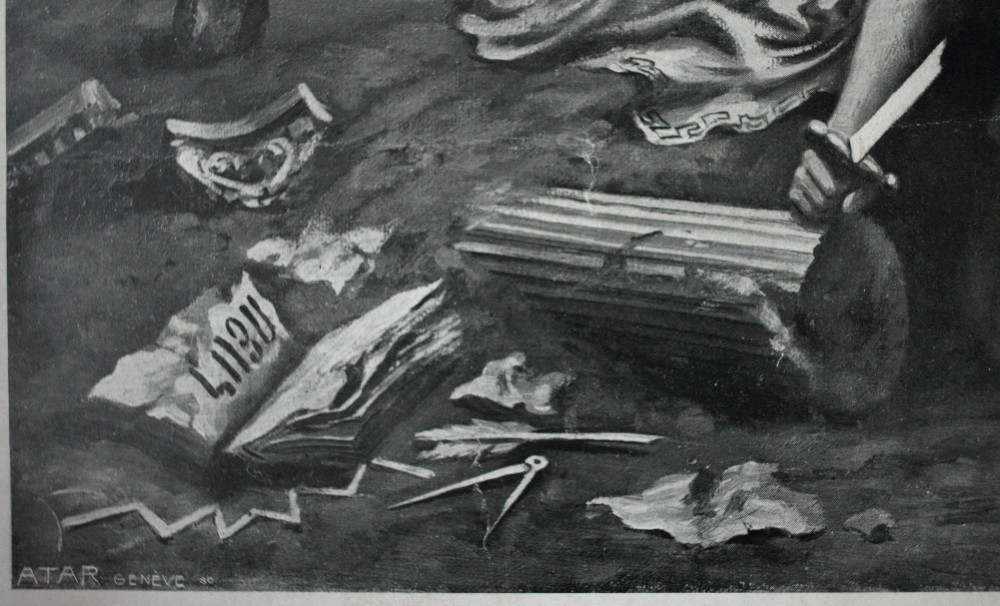
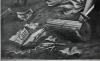
What is writen on the book - what does it signify?
-
To be honest, if a member has no particular interest in concepts like agitation, or personifications, or allusions, or allegories, or referencing, or to what those things meant to the viewers and the creators of the objects that exhibited these characteristics, then I don't think they should be posting on this thread. I would like this thread to be about exploring examples of Armenian cultural and political ephemera from a particular time period - and what they meant to their contemporary viewers. So it is not a place to post your opinions about history or politics or nations - there seem to be plenty of existing threads for that anyway.
-
"Agitation" and "propaganda" are the correct art terms to use for certain types of political posters. It's OK if you don't want to use the correct terminology, but don't criticise those who do. Be nice.
-
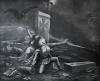
Images like this sort of symbolic drawing. Printed in Geneva (but when?) and signed "Arakelian" (who was he?). Ararat is in the far distance, in the mid distance is a river with the outline of a large building (Ani cathedral?). At the right, Turkish hordes are approaching and above them is Death leading a flock of black birds. Scattered on the ground are discarded and broken impliments of culture and industry: a lyre with broken strings, a broken spade, a book with torn pages, a ruler and divider, fallen columns and capitals. The gravestone must have been drawn by someone who had never seen an actual khatchkar - which would auggest something drawn before the 1880s since by the 1880s reproductions of actual khatchkars had appeared in print.
-
There was a book published recently about Armenian patriotic images - things that were produced to encourage Armenian identity, to agitate for action, to be propaganda for political causes, etc. Does anyone know the name of it - or better still have a copy of it.
-
Is the above something you actually read, or something a communist grandfather told you? Where on earth did you get such a fantasy from?
-
Which translation is best? I've got the one by Donald Abcarian but it seems a bit lifeless.
-
Oh, and carpet collectors are generally not believers in the political propaganda produced about carpets - most would not say that the Pazirik carpet was a nomadic Turkic production, and they just ignore the recent propaganda and invented terminology from Azerbaijan.
-
Gantzhorn's "The Christian Oriental Carpet" book is not that highly regarded amongst carpet collectors. The main thing they talk about is how on earth he got such a large and extravagent book financed. The book is regarded and valued mostly because of its many pictures, and not because of the author's opinions. I have a copy. My opinion is that a lot of of his opinions are wrong, and often quite laughable. And the opinions that are not wrong are too contaminated by and mixed in with the nonsense to be influential and game changing. He may have been trying to do to carpets what Strzygowski did to architecture but he does not succeed. There should still be no problem in buying a copy - the reprint is still in print and it is sold on amazon and ebay (the reprint has a different title, "Oriental Carpets", but it is the same book).
-
?? There is no elaboration or message. The article is particularly detailed and interesting, but I think that it was not clear to readers of the post who wrote it (you placed three links between his name and the title, and didn't mention a "by" or anything, and the armenapedia article actually doesn't say who wrote it). It initially wasn't clear to me anyway, so I was just clarifying it. Maybe I should have sent you a message asking you to clarify it - but it seemed easier just to say it. No offense was intended if that is what is on your mind. And you know that Lucine Kasbarian is his daughter, but again, do other readers know that?
-
The above is by Charles Kasbarian Garabed. (I know you mention that, Arpa, but it is not stated very clearly). His daughter is the woman who wrote that "Did the Armenian Writers Conference Walk the Talk?" HETQ article last year that caused some controversy and disturbed some complacency.