MosJan
-
Posts
32,837 -
Joined
-
Last visited
-
Days Won
333
Content Type
Profiles
Forums
Events
Gallery
Everything posted by MosJan
-
muys angam espes enq olimpyadayin masnaktselu !!! menak te sujuq basturma pit tanenq Sorry Arpa - l@tsonvats Apuxt yev Chamanov Apuxt
-
yes chem haskanum - kareli e havatal, tsavel, hoq tanel, pashtpanel bnutyan@ sakayn iyspes ?? http://www.ebaumsworld.com/video/watch/906397/
-
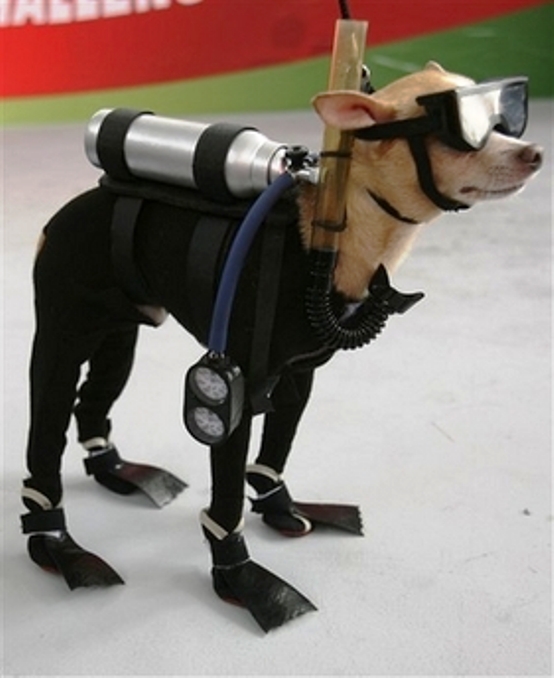
Mexico has also send help to Stalinashvili Mexican Navy Seals will be stationed in Poti for 5 years Rare Sighting of Mexican Navy Seal in Poti

-
Over 500 S.Ossetian refugees return home 15:11 | 05/ 09/ 2008 http://img.rian.ru/i/b_print.gif VLADIKAVKAZ, September 5 (RIA Novosti) - A total of 502 refugees returned to South Ossetia from North Ossetia during the previous 24 hours, a spokesman for the Russian republic's Emergencies Ministry said Friday. Vladimir Ivanov said 30,602 people had returned to South Ossetia from Russia's Southern federal district since August 12, when Russia concluded its operation to "force Georgia to peace." The spokesman also said 6,545 South Ossetian refugees were currently staying with relatives in Russia's North Ossetia. Moscow said hundreds of civilians were killed in Georgia's attack on South Ossetia on August 8, and thousands fled the devastated region. A total of 225 people from South Ossetia remain in Russian hospitals. On August 26, Russia recognized South Ossetia and another Georgian breakaway republic, Abkhazia, as independent states.
-
World USS Mount Whitney arrives in Georgian port of Poti 19:50 | 05/ 09/ 2008 Print version SEVASTOPOL, September 5 (RIA Novosti) - The third U.S. Navy vessel to bring humanitarian aid to Georgia arrived in the Black Sea port of Poti on Friday, a Russian navy source said. The USS Mount Whitney, which passed through the Bosporus on Wednesday, brought various supplies, including blankets, hygiene kits and baby food to become the first NATO ship to arrive in Poti since the Russian-Georgian conflict. Two previous ships, the U.S. Coast Guard Cutter Dallas and USS McFaul docked in the Georgian port of Batumi. The White House announced Thursday a $1 billion economic aid package for war-ravaged Georgia. The Black Sea Fleet source also said the flagship of the U.S. Sixth Fleet was big enough to carry heavy weapons, which - the Russian military believes - is probably the main part of the delivery. An intelligence source said Russia was scrutinizing the vessel. "Very soon it will be clear, what the ship has really brought to Georgia," the source said. The Blue Ridge class ship is a command and control vessel, which, the source said, coordinates the group of NATO ships in the Black Sea also including two U.S., one Spanish, one German and one Polish vessel. Lt. Col. John Dorrian, a spokesman for the US European Command, said Friday that Russian peacekeepers would not be allowed to examine the cargo as the port of Poti is on sovereign Georgian territory. Russia's Foreign Ministry said Friday that the overall deadweight of NATO ships can exceed the limit set by international agreements and added that no military action is planned against the vessels. The U.S. aid is being provided to Georgia after it launched an assault on South Ossetia in an attempt to regain control over the republic, which split from Tbilisi in the early 1990s. Moscow subsequently launched an operation to "force Georgia to accept peace," which was concluded on August 12. Since then more than 400 metric tons of U.S. aid has been shipped and flown to Georgia amid disputes over the NATO presence in the Black Sea and Moscow's recognition of the independence of South Ossetia and Abkhazia, a second separatist Georgian republic.
-
News Send to friend | Print version http://www.russiatoday.com/media/news/0/48bf93e28d4bf.jpg September 4, 2008, 11:52 Targeting civilians' homes This is actual footage of what Georgian troops were doing in Tskhinval when they entered the city after shelling it all night on August 8. A Georgian machine gunner shoots at civilian dwellings and it seems he enjoys the process like a boy playing a video-game. But it is not. http://www.russiatoday.com/news/news/29914
-
Cool reception for Cheney in Azerbaijan American Vice President Dick Cheney's visit to the Azerbaijani capital, Baku, appears to be have been unsuccessful for Washington, unlike his visit to Tbilisi. Cheney received a cool welcome and, according to Russia's Kommersant newspaper, Azerbaijan's President Ilkham Aliyev has implied that Baku is going to play a waiting game concerning the Nabucco gas pipeline, which is set to bypass Russia. Neither President Ilkham Aliyev nor the Prime Minister, Artur Rasizade, were there to greet Cheney at Baku airport. Instead, he was met by the country's First Deputy PM and the Foreign Minister. The Kommersant newspaper reports that Cheney was very annoyed by the results of the meeting with President Aliyev and even refused to attend a ceremonial supper in his own honour. Aleksandr Pikaev, an analyst from the Institute for World Economy and International Relations, believes Dick Cheney is hardly the right man for diplomacy in the region. "The Americans didn't find anything else to support their failed ally Saakashvili other than sending to the region Mr Cheney who is incredibly unpopular in the world, who is associated with the war in Iraq, with all this conservative black-and-white vision of the world, who was accused of corruption – remember the Halliburton affair in Iraq. If the Bush Administration really wanted to consolidate the international community behind the U.S. in criticising Russia, I think they should have found somebody else, not Mr Cheney," Pikaev said.
-
News Send to friend | Print version http://www.russiatoday.com/media/news/e/48c1419098962.jpg September 5, 2008, 19:25 Joint declaration on South Ossetia signed in Moscow The leaders of the Collective Security Treaty Organisation (CSTO) have just signed a joint declaration on the developments in the Caucasus at a meeting in Moscow on Friday. The group has also expressed its support of Russia's reaction to Georgian aggression against South Ossetia. The issue has also been at the forefront of EU foreign ministers’ talks in France. Countries in the Collective Security Treaty Organisation will make their own minds up on the issue of recognising South Ossetia. This was the conclusion of Russia's President Medvedev, following a summit of the organisation. ”All our partners in the CSTO will be guided by their own opinion on the issue of the independence of South Ossetia and Abkhazia. This is how it should be according to the norms of international law. They'll be guided by their own national interests. Russia believes this is absolutely right,” Dmitry Medvedev said. But the Armenian President stressed that the members of the organisation should show a united front in different issues, including foreign policy. ”Along with strengthening the military aspects of CSTO, we must also coordinate our foreign policy, because we are members of one organisation,” said Armenian President, Serzh Sargsyan. The Collective Security Treaty Organisation (CSTO) which includes Russia and six of its neighbouring countries - Armenia, Belarus, Kazakhstan, Kyrgyzstan, Tajikistan and Uzbekistan - backed Russia's actions in South Ossetia and condemned Georgia's aggression in a joint statement issued on Thursday. “The statement highlights the key points and has all the necessary verifications, including condemnation of Georgia's military actions against South Ossetia. It condemns the policy of double standards and admits the situation in the conflict zone is dangerous,” said Russian Foreign Minister, Sergey Lavrov. Russia is clearly satisfied with the support, but there is still a lot of work to be done and diplomatic talks continue on Friday at the highest level. To watch the full press-conference of the leaders of the Collective Security Treaty Organization in Moscow, please follow link. Meanwhile, a two-day informal meeting of EU foreign ministers which starts in Avignon, France, on Friday will focus on the situation in the Caucasus. The summit in Avignon will examine the questions of rendering humanitarian aid to Georgia and assistance in restoring its economy. The EU FMs will also consider the effect of events in South Ossetia on relations between Russia and the EU. The special EU summit on September 1 took a moderate stance concerning Russia. Although denouncing the recognition of South Ossetia and Abkhazia, the EU leaders refrained from taking any sanctions against Russia. At the same time, there is a group of countries inside the EU, which continue pushing through a tough anti-Russian line. The core of the bloc includes the Baltic states, Poland and the UK. The second day of the informal EU foreign ministers’ summit is expected to be devoted to the European Union’s relations with the U.S. and their future prospects. The French Foreign Minister Bernard Kouchner will also deliver a report on his trip to the Middle East.
-
If EU introduces sanctions against Russia, Europe will have severe problems with fuel French Foreign Minister Bernard Kouchner stated that the European Union would be discussing two variants of sanctions against Russia at a forthcoming summit. The Polish variant stipulates the introduction of rather tough measures, whereas the Italian variant contains only abstract criticism of Russia’s actions. The soft variant contains a requirement to pull out Russian troops from the territory of Georgia, from the port of Poti and buffer zones. In addition, the EU will ask for guarantees from Russia not to use its present line of behavior against other countries. The tough variant of the document stipulates the introduction of financial and economic sanctions against Russia. According to this draft resolution, the EU may recommend large business to cut its financial investments in Russia and recognize the Russian market as highly unstable and risky. To make matters worse, the European Union may recommend European banks not to loan up Russian banks and companies. Moscow hopes to conduct negotiations with several of its European partners in an attempt to push them to abstract formulations and abstain from sanctions. The talks will most likely be conducted with Moscow’s potential allies – Germany, Italy, Spain, France and Finland. Russia may offer these countries a change of the Russian stance on the Iranian problem and economic preferences in return to their support. Europe may suspend the talks on the partnership and cooperation agreement and activate efforts aimed to diversify fuel shipments to Europe. The first measure does not seem to be of much importance to Moscow, although the second one can be quite dangerous. Russia may have severe problems with its gas pipeline projects known as the Northern Stream and the Southern Stream. In addition, Europe will most likely decide to accelerate the implementation of the Nabucco project that will deliver Caspian hydrocarbons to Europe bypassing Russia. If Europe eventually decides to introduce sanctions against Russia, at least one Russian oil company may reduce crude shipments to Europe at Russian government’s request. Russia may cut its oil shipments particularly to Poland and Germany. A reduction may occur already on September 1, Reuters reported with reference to British media. It is worthy of note that Prime Minister Putin stated in his recent interview with CNN that Moscow would not reduce its oil and gas shipments to Europe because Russia depends on its customers, just like the customers depend on Russia’s resources. Russia’s Foreign Minister Sergei Lavrov described the idea of European sanctions against Russia as “a product of ill imagination.” Russia’s ambassador to the European Union, Vladimir Chizhov, urged the EU to abstain from the sanctions against Moscow. It has just been reported that the European Union leaders will not decide on sanctions against Russia at a summit Monday in Brussels. A high-ranking official in President Nicolas Sarkozy's office says that for now "we don't foresee any sanctions decided on by the European Council,” the AP reports. The official acknowledges that some countries are pushing for sanctions against Russia over its crisis with Georgia. But Sarkozy's office believes Europe must concentrate now on pressuring Russia to apply a cease-fire agreement. France currently holds the EU presidency. The official spoke Friday on condition of anonymity because of office policy. He elaborated on remarks by France's foreign minister, who has said sanctions were being considered.
-
Russia to create electromagnetic super weapon http://english.pravda.ru/img/idb/weapon-6.jpg Defense strategists place their stakes on high-tech weapons. Nearly all superpowers of the world conduct their works in the development of such weapons. It transpired recently that Russian scientists developed a generator, the capacity of which is comparable to that of a nuclear unit. It is a genuine scientific breakthrough, and it is already clear that the defense industry will not be the only field where the new super device is going to be used. An individual, who is miles away from physics and is only familiar with home electricity, will not be able to imagine the power of several billions of watts. It will be even harder to imagine that such power can be generated by a device that is fit to be placed on a table. “The devices generating such power – billions of watts – used to be very large in size before. This appliance has a very short impulse, which makes it possible to have it on a desk – it is a very compact device,” the Director of Lebedev’s Institute of Physics, Vice President of the Russian Academy of Sciences, Gennady Mesyats said. Mikhail Yalandin, one of the creators of the miraculous machine, said that the scientists had assembled two of such devices in Yekaterinburg – a bigger and a smaller one. Never before had a relatively small device ever been able to generate electromagnetic impulses the capacity of which could be comparable to a huge water power plant. It is ten times as much as any foreign-made analogue. The new device can be used practically anywhere. The invention will let specialists create radar telescopes and radars of new generation. Missile troops and defense departments on the whole will most likely be the first customers to order the appliance. The new generators can also be used to check the stability of large energy objects and systems. The device is capable of imitating the strays which appear as a result of a lightning strike or even a nuclear blast. It is impossible to take photographs or film a video of the new generator in action because it immediately puts all electronic devices out of order. The research that was used for the creation of such a device can be applied in the development of electromagnetic weapons. “No one has ever studied biological effects of such impulses. It is obvious that it affects the electronic equipment near it. Computers or cell phones have to be screened from such radiation,” Mikhail Yalandin, a senior specialist of the Institute of Electrophysics said. The device was called Nika, which means ‘victory’.
-
Aprahamian Family Story Feted DETROIT – The newly published Arminuhe, a Memoir, and the Amirian Family History, a book written to honor the life of Arminuhe Amirian Aprahamian, was introduced to the Detroit Armenian community with a dinner and program for several hundred guests at St. John Armenian Church Cultural Hall in Southfield on Friday August 20. http://armeniangenocidesurvivor.com/sitebuildercontent/sitebuilderpictures/webassets/Amirian_Family.jpg Arminuhe Aprahamian was born in Van on March 15, 1913 and died on November 6, 2002. Her memoir begins in the village of her birth, Lezk, and then traces her life through the Genocide, to her early life in Niagra Falls, and then to her married life in Detroit. Her memoir has short biographies of her siblings, Christina, Kourgan and Vahan. It also contains two transcripts of her own memories recorded several years ago. The 300-page book contains nearly 300 family photos and documents, including the priceless photo of Arminuhe’s mother and her three children taken in a camp tent in Bakouba, Iraq in 1920. An honored guest of the evening was Bishop Paren Avedikian from Holy Echmiadzin. Avedikian had been pastor of St. John Armenian Church of Greater Detroit for 24 years and during that time he had become very much a part of the Aprahamian family. Other honored guests were 10 Amirian family members from Niagara Falls and Buffalo, nephews and nieces of Arminuhe. http://armeniangenocidesurvivor.com/sitebuildercontent/sitebuilderpictures/webassets/Souren_and_Bishop.jpg Souren Aprahamian and Bishop Paren Avedikian Edmond Azadian who wrote the introduction to the memoir, was the keynote speaker. He said that Avedikian’s presence made the evening complete, commenting that it was most symbolic as Aprahamian had so much love for him. He praised her and her husband, Souren, both survivors of the Genocide, for their struggle to provide a decent life for their children. And, at the same time they became bulwarks of the Detroit Armenian community, setting moral and spiritual standards and preserving traditional values. He concluded by stating that the book is beyond a daughter’s tribute to her mother and beyond a tribute to the valiant mothers of Souren and Arminuhe, Yeghisapet and Prapion, respectively, who saved their children from certain death. The text, lavishly, complemented and photography, chronicles not only the Aprahamian family story, but also that of the entire Detroit community. Vivian Bradbury, manager of San Serif, Inc., publisher of the memoir, spoke of the importance of preserving family history. She stated that a concerted effort has to be made to document important family stories. Also one should take time to caption family photographs so the with the passage of time names and events will not be forgotten. Elizabeth, daughter of Armuinuhe Aprahamian and editor of the book, thanked all those who came to honor her mother and stated at the conclusion of the program that each invited family would receive a gift copy of the memoir. The book was the fulfillment of a promise she had made to her mother in 1997 and that, for reasons of Arminuhe’s declining health, had been put aside and forgotten until Arminuhe’s passing in November 2002. Elizabeth thanked one of her co-editors, her father Souren Aprahamian, who was also born in the village in Lezk. He has written his autobiography, From Van to Detroit, Surviving the Armenian Genocide, and excerpts of his book appear in this memoir. However, for Arminuhe’s book, Souren recalled in unbelievable detail the history of Armuinuhe’s family. Elizabeth Aprahamian also thanked her cousin, Vars Garabedian Seraydarian, who submitted the biographies of Arminuhe’s sister Christina, brothers Kourgan and Vahan and niece Lillian, all of Niagra Falls. Another co-editor, a young man of 17, Andrew Mehall, assisted with the cover design and prepared for publication the extensive portfolio of documents and pictures. http://armeniangenocidesurvivor.com/sitebuildercontent/sitebuilderpictures/webassets/Aprahamian_Family.jpg The Aprahamian Family As a special surprise gift, Mehall presented to Souren Aprahamian with an exquisite color pencil drawing of the village of Lezk, a collaborative effort with his art teacher. A letter of congratulations from the pastor of St. John Armenian Church, Rev. Garabed Kochakian, who was unable to be present, was read by Dr. David Aprahamian. Margaret Lafian played the piano throughout dinner and sang two of Arminuhe Aprahamian’s favorite songs, "Smile" and "Dele Yaman". Those who are interested in acquiring either Souren’s Autobiography or Arminuhe’s memoir may do so by contacting St. John Armenian Church, 22001 Northwestern Hwy., Southfield, MI. 48075. All proceeds go to St. John.
-
 OUTSPOKEN GENOCIDE WITNESS, ADL VETERAN, APRAHAMIAN DIES AT AGE 101 DETROIT - Centenarian Souren Aprahamian, a pillar of the Armenian community here, died on August 6 at the Sunrise Assisted Living in Farmington Hills after a short illness. He celebrated his 101st birthday on June 15. Both Souren Aprahamian and his late wife, Arminuhe, were Genocide survivors. Both were born in the village of Lezk, in Van, historic Armenia. http://armeniangenocidesurvivor.com/sitebuildercontent/sitebuilderpictures/webassets/Aprahamian_Family.jpg The Aprahamian Family Souren Aprahamian, in memory of his 35 family members who died in the Genocide, became a leading and eloquent spokesperson in the greater Detroit community, both in speaking about the Genocide and in his untiring efforts for the Armenian Cause. In 1993, he published his autobiography, From Van to Detroit, Surviving the , which is now in its third printing. Of the heroic defense of Van, he describes the glorious morning of May 5, 1915, when, sitting on the garden wall in front of the family home, he watched as the liberating Russian army arrived in Van and saw "the numerous sailboats on Lake Van, moving, moving, away from the seaport Avantz. It was the Turks running away! That sight will never fade, seventy five or a hundred years later." Aprahamian's incredible memory and his command of the English language has given readers a remarkable story of survival and of the difficulties encountered as life began anew in America. His book was translated into Eastern Armenian and published by the Tekeyan Cultural Association in Armenia in November 2001, at which time he was honored. Aprahamian freely gave his book to those he thought were genuinely interested in learning about the Genocide. In his efforts to educate and influence, he sent letters to the media and politicians seeking recognition of the Genocide. At the April 24 Genocide commemorations, he was frequently interviewed by the press and television reporters. He spoke yearly at Wayne State University and at the AGBU Alex and Marie Manoogian Charter School in Southfield. He was often invited to high schools to speak to students who were studying the Genocide. His last interview, just weeks prior to his passing, was given to students from University of Detroit/Mercy at the Sunrise Assisted Living facility where he spent the last eight months of his life. Aprahamian's work as an educator and spokesman are compiled in a book titled A Journey of One Hundred Years, which was edited by his daughter, Elizabeth, and published in 2007 on the occasion of his 100th birthday. Both Souren and Arminuhe Aprahamian were active members of the Detroit-Armenian community. They were both lifelong members of the Armenian Democratic Liberal (ADL) organization. They were carrying on a tradition of both of their fathers, who had been disciples of the Armenagan party founder, Mugerditch Avedisian, in Van. The Armenagan party was the forerunner of the ADL. Both were charter members of the Detroit Tekeyan Chapter. In January 2007, on the occasion of Souren Aprahamian's centennial birthday, the Detroit chapters of Tekeyan and the ADL awarded him the position of Honorary Life President. In October 2007, on his 12th trip to Armenia, he was honored and presented with an award by Tekeyan Cultural Organization of Armenia for his untiring work on behalf of the organization. Both Souren and Arminuhe Aprahamian became members of St. John Armenian Church of Greater Detroit at its inception in 1931. Aprahamian served for 18 years on the parish council. He was a member of the Knights of Vartan. He was honored as "Father of the Year" in 1984 by the Men's Society of St. John; by the AGBU Detroit Men's Chapter in 1988 with a testimonial dinner, with both Alex and Marie Manoogian present, for his dedicated service to church organizations; and as "Father of the Year" in 2005 by the Women's Guild. Aprahamian was the son of Apraham DerStepanian and Yeghsapet Melikian. His father died from cholera, as did thousands of others, during their first withdrawal from Van to Eastern Armenia in 1915 when they no longer under the protection of the Russian army. In the tortuous years following that withdrawal, Aprahamian credited his mother's instincts and efforts with keeping five members of the family alive. She never gave up hope when they left Van for the last time in 1918. They miraculously survived starvation and constant Turkish attacks as they fled for their lives and arrived at Bakouba, Mesopotamia (now called Iraq) under the protection of the British army. They lived for two years in the scorching heat in refugee tents. Aprahamian's brother Nahabed, who was in Detroit, brought the surviving members of the family which was comprised of Aprahamian, mother Yeghsapet, nephew Haigaz, (Nahabed's son) and their uncle Roupen and wife Satenig. They arrived in Detroit on July 4, 1921. Aprahamian began school at 14, knowing no English but learned quickly. He received double promotions beginning in grade school and graduated from Detroit Central High School at 19. He attended Wayne University and graduated with a bachelor's degree in chemical engineering in 1930 and a bachelor's degree in mechanical engineering in 1931. At 24, he met Arminuhe Amirian in Niagara Falls, NY. Miraculously, Arminuhe's mother, Prapion, had saved her three children, Arminuhe, Christina and Kourgan, during the eight years of the Genocide. She was able to deliver them in 1923 to her husband Hatchig who lived in Niagara Falls prior to the Genocide. Souren and Arminuhe were married in Detroit on November 1, 1931. They had three children, Ashod, Rhaffi, Edward Herach and Elizabeth. Aprahamian worked for many years in family-owned grocery stores and in 1942 found employment at the Detroit Ordnance District. When the war ended in 1945, he was hired by War Assets but he resigned that position when he and his partner Haig Hughesian bought a grocery store, Telegraph Shopping Center, in Taylor, Mich. After selling the store in 1957, he was rehired by the Detroit Ordnance District as a mathematician. In 1965, he became head of the Engineering Branch of the Quality Assurance Directorate. In 1973, after losing the vision of his right eye, he retired after 21 years of devoted service to the federal government and became the first recipient of the defense supply agency distinguished service award. Aprahamian is survived by a son, Edward, and daughter-in-law, Cynthia; daughter Elizabeth; grandchildren Edward, Mary, Jeffrey, David and Heidi; great-grandchildren Allison and Elizabeth; nephews and niece Arthur, Carol and Anthony, other relatives and many friends.
-
PRESIDENT OF ARTSAX PARTOOK IN A SOLEMN CEREMONY OF HANDING CARS...http://www.armtown.com/img/photo/aza_en_2647.jpg On 3 September NKR President Bako Sahakyan partook in a solemn ceremony of handing cars the veteran freedom fighters of the first disability group. After the ceremony the President held a meeting with Russian entrepreneurs and philanthropists of Armenian origin Arthur Varzhapetyan and Armen Sahazizyan, founder and executive director of the "Louding" company respectively. The Head of the State expressed his gratitude to the philanthropists for assistance provided to Artsakh, in particular for cars given to the disable veterans. Issues related to socioeconomic situation in the Republic and prospects for cooperation were discussed at the meeting. NKR premier Ara Haroutyunyan partook at the talks.
-
ARMENIA RULES OUT ABKHAZIA, SOUTH OSSETIA RECOGNITION * article's photo President Serzh Sarkisian has made clear that Armenia will not formally recognize Abkhazia and South Ossetia as independent states any time soon, while reiterating his support for their residents’ right to self-determination. In a wide-ranging foreign policy speech made public late Wednesday, he also indicated that Armenia will continue to seek simultaneously good relations with Russia, the West and other major regional players after the devastating war in neighboring Georgia. He said the Russian-Georgian conflict underlined the need for his landlocked country to have “alternative transit routes” for external commerce running through Iran and Turkey. “Today one is wodenring from time to time why Armenia is not recognizing the independence of Abkhazia and South Ossetia,” Sarkisian said, speaking at an annual meeting of Armenian ambassadors abroad. “The answer is simple: for the same reason that it did not recognize Kosovo’s independence. Having the Nagorno-Artsax conflict, Armenia can not recognize another entity in the same situation as long as it has not recognized the Nagorno-Artsax Republic.” The realization of a nation’s right to self-determination “takes times” and requires the understanding of “all interested parties,” explained Sarkisian. That is why Armenia will keep trying to “convince” Azerbaijan to come to terms with the loss of Artsax, he said. Russia unilaterally recognized the two breakaway regions after crushing Georgian in a brief war over South Ossetia and seems to be pressing Armenia and its other allies to follow suit. The issue will be on the agenda of Friday’s meeting in Moscow of presidents of Russia, Armenia and four other ex-Soviet states aligned in the Collective Security Treaty Organization (CSTO). President Dmitry Medvedev already discussed it with Sarkisian at his summer retreat in the Black Sea city of Sochi on Tuesday. With more than 70 percent of Armenia’s foreign trade carried out through Georgian territory, antagonizing Georgia would prove disastrous for a country already blockaded by Azerbaijan and Turkey. The Armenian economy has already been affected by major disruptions in rail and ferry traffic caused by the Russian-Georgian war. The war has also called into question continued vital supplies of Russian natural gas to Armenia through a pipeline passing via Georgia. “Naturally, we are interested in a rapid and peaceful resolution of Georgia’s problems and the establishment of lasting peace there,” Sarkisian said. He at the same time again criticized Tbilisi for attempting settle the South Ossetian conflict by force and said the de facto secession of this and other territories does set a precedent for the settlement of the Artsax conflict. “Let them repeat that Kosovo is not a precedent, and some may say that Abkhazia and South Ossetia are not precedents either,” he said. “But the fact is that exceptions not considered precedents are beginning to set a pattern for the resolution of such conflicts.” Sarkisian further announced that Armenia is poised to end its heavy dependence on Russia for natural gas with the impending launch of a gas pipeline from Iran. “Thank God, the gas pipeline has already been built, and we can receive gas from the Islamic Republic of Iran as early as tomorrow,” he said. “Work on enhancing the capacity of that pipeline will likely end in late October or early November, and we will be able to import from 2 to 2.5 billion cubic meters of [iranian] gas each year. That is, as much as we import now [from Russia.]” Sarkisian went on to speak of his “political expectations” from Turkish President Abdullah Gul’s upcoming visit to Yerevan and the broader thaw in Turkish-Armenian relations. “Without forgetting the past, we should look to the future, form an agenda of mutual interest and start contacts without preconditions,” he said. The Armenian leader specifically stressed the importance of reopening the Turkish-Armenian border, telling his top diplomats to help generate greater international pressure for the relaunch of the Gyumri-Kars rail link. “Arm yourselves with maps, statistical data and arguments: we must make sure everyone realizes that these several kilometers of railway can radically change the whole picture of regional partnership.” Sarkisian further stated that he intends to “deepen and strengthen” Armenia’s “friendly partnership” with the United States as well as other Western powers and structures. He said he will be personally overseeing his government’s implementation of a plan of actions stemming from Armenia’s inclusion in the European Union’s European Neighborhood Policy program. And he confirmed that a planned NATO-led military exercise in Armenia will go ahead later this month despite the latest upsurge in Russia-West tensions over Georgia. Yerevan will “consistently” take other actions stemming from its Individual Partnership Action Plan (IPAP), he said. Those include Armenian participation in the NATO-led peace-keeping missions in Kosovo and possibly Afghanistan. Sarkisian and his predecessor Robert Kocharian have repeatedly stated that despite growing security ties with the West, Armenia will not seek membership in NATO in the foreseeable future and that the military alliance with Russia remains the bedrock of its defense doctrine. Sarkisian reaffirmed this “complementary” policy in his speech. “We will by all means develop and expand our strategic allied relations with Russia, which are based on the centuries-old friendship of our peoples,” he said. (Photolur photo) * By Emil Danielyan
-
THE ROLE OF ARMENIAN SPORT IN OTTOMAN EMPIRE
MosJan replied to MosJan's topic in Sports and Recreation
ATHLETIC DISPLAY: GENOCIDE MUSEUM REVEALS LITTLE-KNOWN HISTORY OF ARMENIAN SPORTS IN OTTOMAN TURKEy http://www.armtown.com/img/photo/anw_en_3254.jpg An exhibition presenting the hitherto mostly unknown pages of history of Armenian sports in Ottoman Turkey opened at the Armenian Genocide Museum in Yerevan on Tuesday. The display called "Armenian Sport in the Ottoman Empire" features photographs of sportsmen and sport groups in Western Armenia in the early 20th century, issues of the first sport periodical in the Ottoman Empire "Marmnamarz". Museum Director Hayk Demoyan, who conceived the idea, says that last year he discovered all issues of "Marmnamarz" at the museum's library and as a historian was also interested in the subjects of nationalism in sports and sport competition inside the Ottoman Empire and most of all he was interested in the combination of sport and genocide. He says that the subject of "Sport and the Holocaust in Germany" had been studied and that this exhibition and his studies find evidence of how an aim was set in the Ottoman Empire to struggle against successes of ethnic minorities in sports, as a result of which sport clubs were closed and their Armenian athletes fell victim to genocide. Demoyan is currently working on a monograph on the subject of Armenian sports in the Ottoman Empire and his book on this subject is due to be published in the near future. "Marmnamarz" editor, track-and-field athlete Shavarsh Krisyan was one of the many Armenian intellectuals to be deported from Constantinople on April 24, 1915 and later killed. It was then that the newspaper stopped being published. The issue of the "Armenian Scout" periodical published in 1920 on display at the museum is devoted to dozens of killed Armenian sportsmen. And the founder of one of the first football teams in Constantinople, Tork (the team's photograph is displayed), scout leader Vahan Cheraz, who was invited by the government of the first Republic of Armenia in 1919 to develop sports in Yerevan, was later arrested by the Soviet authorities and executed by shooting in 1927. The exhibition also reveals that about 40 Armenian sport clubs operated in Constantinople before World War I. Armenian sport clubs had also been founded in Nikomedia, Karin, Van, Adana and other areas. Pan-Armenian Olympic Games were organized between 1911 and 1914. Armenian football teams participated in competitions of the Ottoman Empire. And during the 5th Summer Olympic Games in Stockholm in 1912 Vahram Papazyan and Mkrtich Mkryan were the first athletes to participate in sport competitions under the flag of the Ottoman Empire. The exhibition at the Armenian Genocide Museum (www.genocide-museum.am) will run till September 15. Vahan Ishkhanyan -
Georgia mobilizes commando units near S.Ossetia - Russian military 19:06 | 02/ 09/ 2008 http://img.rian.ru/i/b_print.gif MOSCOW, September 2 (RIA Novosti) - Georgia is mobilizing commando units near its border with South Ossetia, a senior Russian military official said on Tuesday. Russia officially recognized South Ossetia and Abkhazia as independent states on August 26, saying the move was needed to protect the regions after Georgia's August 8 attack on South Ossetia. "According to our information, Georgian security forces are trying to restore their [military] presence in Georgian populated villages in South Ossetia. With this aim, Georgia is mobilizing its special forces from the interior and defense ministries near the administrative border with South Ossetia," Col. Gen. Anatoly Nogovitsyn, the deputy chief of Russia's General Staff, said. He also said that Russia had deployed 19 peacekeeping observation posts in South Ossetia to provide security and stability in the republic, adding that South Ossetian military detachments were also mobilizing near the border to counter any possible Georgian attacks. Georgia attacked South Ossetia on August 8 in an attempt to regain control over the republic, which split from Tbilisi in the early 1990s. Most people living in South Ossetia have Russian citizenship and Moscow subsequently launched an operation to "force Georgia to accept peace." The operation was concluded on August 12. Russian President Dmitry Medvedev said on Sunday that Russian support for South Ossetia and Abkhazia envisaged military as well as economic assistance.
-
News Send to friend | Print version http://www.russiatoday.com/media/news/c/48bfbd2658701.jpg September 4, 2008, 14:45 "Cultural Terrorism" in South Ossetia The Commission of the Russian Federation on UNESCO affairs has called for the international community to strongly condemn Georgia for the "cultural terrorism" it inflicted upon South Ossetia. "The commission notes with indignation that Georgia's criminal aggression against South Ossetia has led not only to the loss of irreplacable human lives, but also to the defilement of historical and cultural monuments," it said in the official statement. More specifically, a complex of third-century buildings was completely destroyed over the course of military operations. In the centre of Tskhinval, St. Gregory’s Church, which dates back to the seventh century, and the Church of the Virgin Mary, from the 17th century both sustained irreparable damage during bombings. According to the commission, this is not only an irreparable injury to South Ossetia's cultural life, but also a gross violation of such important international agreements as "The Hague Convention for the Protection of Cultural Property in the Event of Armed Conflict" (1954), "The UNESCO Convention Concerning the Protection of World Cultural and Natural Heritage" (1972) and the UNESCO declaration of 2003
-
News Send to friend | Print version http://www.russiatoday.com/media/news/a/48bfae15bf505.jpg September 4, 2008, 16:13 Georgia to restore army – U.S. media The New York Times reports that Georgia has already started to draw up projects for reinforcing its military. A number of other American media outlets suggest military issues could be on the agenda of Dick Cheney's visit to Tbilisi. The Wall Street Journal reports: “In private meetings, the Vice President, Dick Cheney, will also be sounding out Georgian President Mikhail Saakashvili and other officials about how the U.S. and its allies could help strengthen economic and military capabilities. In the past the U.S. has been careful not to go too far with military assistance in the region... Now that policy might be ripe for reconsideration, many experts say. An initial step could be to increase the number of U.S. military trainers in Georgia.” Source: wsj.com The New York Times says: “Just weeks after Georgia’s military collapsed in panic in the face of the Russian Army, its leaders hope to rebuild and train its armed forces as if another war with Russia is almost inevitable. Georgia is already drawing up lists of options, including restoring the military to its pre-war strength or making it a much larger force with more modern equipment... Georgia’s decision to attack Russian and South Ossetian forces raises questions about the wisdom of further United States investment in the Georgian military, which in any case would further alienate Russia.” Source: nytimes.com
-
News Send to friend | Print version http://www.russiatoday.com/media/news/9/48bf8d10bddc8.jpgStill from mobile phone video September 4, 2008, 10:10 Allegations of war crimes begin to surface As the last of the refugees returned to the war-scarred city of Tskhinval, the horrors they’d experienced while waiting for evacuation are gradually coming to light. A video filmed on a mobile phone, which appears to show Georgian troops firing on civilian buildings, has surfaced on the Internet. The video was apparently recorded by a Georgian soldier as he manned a machine gun. His cry of 'Yoo hoo!' as he fired on the building reminded viewers of 'a child playing a video game' - but they were real bullets and real human targets. An investigation into crimes allegedly committed by Georgian troops is currently underway and the exact number of casualties has yet to be established. Accurate estimates of the death toll have been hampered by the chaos that took over the city during the fighting. Many rushed to bury their friends and relatives in their own gardens, school playgrounds and on hospital grounds. They felt it was too dangerous to venture onto the city streets. Svetlana Nanieva and others like her didn't get the closure of a proper burial for her son. "My house was burnt down and my son died in the fire. Nothing was left of him. I have nothing left," she cried. Her neighbour, also named Svetlana, says she was lucky to lose only her house and not her family. She managed to run to a bomb shelter just minutes before a Georgian artillery bombardment levelled her street. "Two pregnant women were killed on our street. One was killed by a bomb and the other was beheaded and left on the street," said Svetlana Gogloeva. The city's Jewish quarter took the brunt of the bombing. No wonder then that Russia's General Military Prosecutor chose this emotionally charged site to share the results of his investigation thus far with the media. "There was no suggestion that they wanted to destroy military equipment. They shot at houses and civilians basically," said prosecutor Sergey Fridinsky. He said more than a thousand homes have been completely destroyed and many more damaged.
-
News Send to friend | Print version http://www.russiatoday.com/media/news/2/48bf640a44c3a.jpg September 4, 2008, 8:08 Georgia begins life without Russia Russia has closed its embassy in the Georgian capital, Tbilisi, and recalled its diplomats. It's the first time in post-Soviet history that Russia has cut ties with any nation. When governments cut relations, it's part of a political game. But for ordinary people, such measures can often have serious consequences. Georgian residents have been queuing at the Russian embassy in Tbilisi. Each one has a personal connection to Russia. For some it's relatives, for others it's business. But for every one of them the question is how to continue in this new reality. "I was a Georgian citizen but today I decided I want to give back my Georgian passport. I came here to ask for a Russian passport. I want to live in Kaliningrad. My parents still live in Georgia, but after what happened I cannot stay here anymore and I decided I want to live in Russia," said Anastasia Valozhaikina, an applicant for a Russian passport applicant. Since Wednesday all diplomatic links between Russia and Georgia have been cut. For years Georgia was part of the Russian empire. Then it was one of the wealthiest states of the Soviet Union. The ancient ties between the two peoples are deep and exist on many levels. The Shana family mixes the blood of four different peoples - Georgian, Ossetian, Russian and Jewish. And like most Georgian families, President Mikhail Saakashvili's decision tears them apart. "Because of my profession, I have always received lots of offers to work in the States. It would have meant a better financial situation. But I always refused because I believe family must be together. But today it's different, because a big part of my family lives in Russia and to see them is going to be much more difficult," Viktor Shana said. Until now, Saakashvilli could do what he wanted without criticism. The martial law he imposed at the beginning of the war gave him almost total power. But the parliament's decision to annul it means he has to deal with the local backlash. "Now that martial law is lifted, there are a lot of questions that will be put on the table about Saakashvili's behaviour. We will speak loudly about him and I personally have some questions to ask him about the situation today. I am going to ask parliament to push for the resignation of Saakashvili's government. I think parliament has to act to create a new government," said opposition MP Professor Paata Davitaya. And when the smoke of the war clears, Georgians will have to learn how to live without diplomatic ties with their largest neighbour for the first time in hundreds of years.
-
News Send to friend | Print version http://www.russiatoday.com/media/news/f/48bd7389a8c27.jpgRussian President, Dmitry Medvedev September 3, 2008, 2:44 Common sense prevailed in Brussels - Medvedev In an interview with the Euronews TV channel, Dmitry Medvedev said he regretted Europe’s lack of understanding about why Russia acted in South Ossetia. However, Russia's President said common sense prevailed at the emergency EU summit in Brussels. EURONEWS: What do you make of the EU Extraordinary Summit results? How will they affect Russia's future relationship with Europe? Dmitry Medvedev: I've been following the summit closely. I can tell you frankly that I had preliminary contacts with some of my colleagues. I'd say the results were twofold. First, unfortunately, there is still no understanding of Russia's motives in making the decision to repulse Georgia's aggression, and in making the decision to recognise South Ossetia and Abkhazia as subjects of international law. This is deplorable - but not fatal, because in this world, things change. That's the first point. Another point is much more positive. Even though the EU countries were somewhat divided on this issue, a reasonable and realistic approach prevailed. Some countries called for some imaginary sanctions and punishments but it didn't happen. And I think Europe, primarily the European Union, is better off this way. EURONEWS: Some say that by recognising South Ossetia and Abkhazia, Russia isolated itself from the international community. Do you agree? Dmitry Medvedev: There is no isolation. Russia doesn't want to be isolated, and in fact it is impossible to isolate Russia. The fact of the matter is, after this recognition we all should consider the security architecture we want to have in our complex world in the years to come. It is totally obvious to me that the events that started with Georgian aggression on August 8 made this issue very urgent. The former security architecture proved itself ineffective. EURONEWS: Still, some say there may be sanctions, like expulsion from the G8, or a ban on Russia joining the WTO. In case these measures are taken, what will be Russia’s response? Ordinary Europeans are concerned that a hot summer in the Caucasus may be followed by a cold winter in Europe. Dmitry Medvedev: You know, with sanctions, nothing is ever that simple. Usually, sanctions are like a double-edged sword. I think the decision made by the EU demonstrates how dangerous sanctions are. Common sense prevailed, and the result is obvious. Now, as for other international instruments, say, the G8, it’s not capable of functioning without Russia. Moreover, G8 countries now realise that apart from countries like, say, China and India, without using the so-called “outreach” format, many decisions made by the G8 won’t be fully effective, to say nothing of decisions made without Russia. Thus, the G8 will not survive without Russia. Even if those countries try to come together separately, this will only have a negative effect on the world situation. The matter of the WTO is a particular economic subject. Indeed, we would like to join the WTO, but not at any cost. We have been negotiating on this issue for a long time, and unfortunately these talks haven’t been universally successful. Our position was simple: unless we made a deal soon, we were going to pull out of some treaties that imposed certain restrictions on us with regard to the WTO. We are probably going to go ahead with these steps, unless we see progress in the WTO process shortly. Russia’s membership in the WTO is not just something that Russia alone needs; other economies depend on this as well. We’ll see how things pan out. As for other levers of influence, I don’t think we should expect a cold winter or anything of that nature. Nobody wants to see that. EURONEWS: What I meant was hydrocarbon supplies… Dmitry Medvedev: Yes, I know what you were hinting at. Of course, we are going to fully honour all the obligations Russia took upon itself as the main supplier of hydrocarbons to Europe. EURONEWS: Analysts believe that the Caucasus crisis turned the last page in Russia’s post-Soviet history. Now we are at a starting-point in a new world order —something you have just mentioned, to a degree. What kinds of relations does Russia want to have with its closest neighbours, like Ukraine, and the world in general? Dmitry Medvedev: Our relations with all countries will be based on the same criteria. You are right, I have already said that the August events demonstrated how imperfect the current security architecture is. We need to re-create it according to the reality we face today. Some time ago, I listed five principles I will follow in Russia’s foreign policy. I’d like to repeat them now. First, Russia will fully abide by the standards of international law that define relations between civilised nations. Second, Russia believes the world should be multipolar. It thinks a unipolar world dominated by one state, no matter which one it is, is unacceptable. Third, we are naturally interested in developing normal, friendly relations with all nations in Europe, in Asia, with the United States, with Africa - with all nations on the planet. These relations will be as deep as our partners want them to be. Fourth, I believe that protecting our citizens’ lives and dignity, no matter where they are, is an absolute priority. This is another priority for Russia’s foreign policy. Finally, the fifth principle is that Russia, like any other state, has certain regions it will pay particular attention to. These are regions of our privileged interests. We are going to have special, cordial, long-term relations with the states in these regions. EURONEWS: Is there a danger that the recognition of South Ossetia and Abkhazia will provoke separatist tendencies in other parts of the Caucasus, say, in Dagestan or Ingushetia? Dmitry Medvedev: I see no danger here, unless these matters are worked on by people abroad, who create various scenarios to dismember Russia. EURONEWS: What conclusions did you draw, or maybe what lessons did you learn, after the latest crisis in Russia-US relations? Dmitry Medvedev: I don’t think this was a full-blown crisis, something comparable to the Soviet period. Yet there are tensions. We definitely didn’t want these tensions to start. These tensions were the result of a somewhat unwise policy the United States pursued with regard to Georgia. At a certain point, it gave the Georgian leader the impression he was free to do whatever he wanted and that there would be no retribution for his actions. It was as if he had a carte blanche to use whatever means he would choose. It is clear now what results this produced. I think today, some people in the US are frustrated that their virtual project called “Free Georgia” failed. Its leader discredited himself, its regime is facing a crisis, the situation is tense. The sooner our American partners figure out what is what in this matter, the better Russian-US relations will be. On our side, we are open to restore them in the best way possible. We are willing to have a completely normal relationship with the United States of America. Meanwhile, in an interview with Italian TV channel RAI Dmitry Medvedev talked about how relations between Russia and NATO have changed after Moscow's recent actions in South Ossetia and Abkhazia. RAI: On August 26 you announced that a military response to the anti-missile shield in Europe is possible. Should we be afraid of confrontations that have never happened even during the Сold War. Dmitry Medvedev: I would ask our honorable partners to pay attention to the fact that it’s not we who are extending our borders in Europe, it’s NATO. It’s not us creating new bases, it’s NATO. It’s not us building new anti-missile shields, it’s NATO. And Russia has not responded so far. Instead we have continued dialogue. We said why do you need this? But if the decision to place missiles is made, if the radar is on then we’ll have to react to that, because no good explanations have been presented to us. RAI: After the conflict in Georgia some states bordering Russia - Moldova, the Baltics, Ukraine in particular - expressed their concerns. And also taking into consideration the building of the anti-missile shield in the Czech Republic and Poland, how will you respond to the concerns of your neighbors? Dmitry Medvedev: We won’t respond to the concerns of others. We would like to respond to our own concerns with NATO’s expansion and the growing level of arms around Russia. As for our partners - if we talk about the Baltic states, I think they have phantom pains, nobody is threatening them. It’s just a way of keeping the political elites in a slightly excited mood. Ukraine is a separate subject. I think our closest neighbour now has a great chance to answer one simple question - how to provide their safety. If they think the way to provide safety is to join NATO, then at least only do it after the Ukrainian people get a chance to vote in a referendum on Ukraine's entrance into NATO. Because they are doing it behind the backs of the people, signing some documents, even though the Ukrainian people did not agree. Where is the democracy? And, finally, about Moldova. I think that it is a completely different situation. Not so long ago President Voronin came. We discussed the situation in Transdniestr. I think we have good options to end this matter. I will be meeting with the Transdniestrian side tomorrow. So this is a separate subject in which Russia is ready to lend intermediary services. RAI: Someone in the West started to talk about Russia's expulsion from the Group of Eight and Russia's market responded. Also major Western investors are said to be displeased. Aren’t you afraid that Russia will have to pay for the conflict economically and financially? Dmitry Medvedev: As for the economy, any economy suffers during conflicts. But if we talk about fund rates, they suffer not because of the conflict in Georgia but due to the condition of the largest economy in the world - the American economy. I already told my American partners: it’s necessary that they secure themselves in that field, begin to restore the mortgage system, try to add liquidity to the financial market, because war usually does not make the situation better. What goes on in our trade market is 80 percent due to negative events taking place in America. And only 20 percent are maybe the consequence of the problems in Georgia. RAI: Mr. President, you are the Supreme Commander-in-Chief. Can you explain to our listeners how responsibility is divided between you and Prime Minister Putin? Dmitry Medvedev: The division of responsibilities happens according to the Constitution, the responsibilities of the prime minister and president are documented there. Russia is a presidential republic. The president has great power, including the right to use military force. It is my responsibility and I have to make the decision. RAI: To solve the crisis in Georgia, Italy suggested an intermediary conference in Rome. In one of the interviews for our television company, President Saakashvili agreed to participate. Will you come to Rome to discuss the peace settlement? Dmitry Medvedev: Of course we’re open to discussing anything at conferences and other international forums. But we would like the international community to remember who started the aggression, who’s responsible for killing people, and what price has been paid. As for the Georgian authorities: we think that the current regime has discredited itself. And to us, President Saakashvili no longer exists. He’s a political corpse. But we’re open to discuss any issues including that of the post-conflict settlement in the region.
-
News Send to friend | Print version http://www.russiatoday.com/media/news/9/48bfb837f2bfb.jpg September 4, 2008, 14:42 Russia & security partners agree on South Ossetia The Collective Security Treaty Organisation (CSTO) member countries have supported Russia's stance on the events in the Caucasus, says Russian Foreign Minister Sergey Lavrov. He was speaking at a media briefing after the meeting of the member states’ foreign ministers in Moscow on Thursday. “We will act together in international organisations that may touch upon this subject,” Lavrov said. The Russian Foreign Minister has added Russia is satisfied with the common statement which follows the meeting. ”It denounces the military actions taken by Georgia against South Ossetia and stresses the necessity to avoid such situations in the future,” Lavrov said. To watch the media briefing, please follow the link The CSTO foreign ministers have also agreed to jointly work out a European Security Treaty following a proposal by Moscow. They have approved a consultation plan on foreign policy, security and defence. It will be discussed by the leaders of the CSTO member states at a meeting in Moscow on Friday. The ministers have also pledged to step up efforts against terrorism and drug trafficking. The Collective Security Treaty Organisation includes Russia and six of its neighbouring countries: Armenia, Belarus, Kazakhstan, Kyrgyzstan, Tajikistan and Uzbekistan. The alliance was formed in the early 1990s to provide security in the post-Soviet area.
-
LAVROV DOESN'T DRAW PARALLELS BETWEEN ABKHAZIA, SOUTH OSSETIA AND Artsax http://www.armtown.com/img/photo/pan_en_26924.jpg The situation in South Ossetia and Abkhazia should not influence on settlement of the Nagorno Artsax conflict, Russian Foreign Minister said. "The Artsax conflict differs from those in Abkhazia and South Ossetia," Sergei Lavrov told a news conference after the CSTO Foreign Ministers' meeting. Saakashvili frustrated the talks and destroyed all settlement mechanisms. Nothing of the kind happens in case with the Artsax conflict," he said, The Moscow Post reports.
-
PRESIDENT PRESENTED ARMENIA'S POSITION OF ABKHAZIA AND SOUTH OSSETIAhttp://www.armtown.com/img/photo/pan_en_26915.jpgArmenian President Serzh Sarsgyan presented yesterday Armenia's stance on Abkhazia and South Ossetia, the RA leader's press office reported. "The reason for not recognizing Abkhazia and South Ossetia is the same that was in case with Kosovo. Armenia can't recognize independence of these regions due to Nagorno Artsax problem," the President said. "The purpose of our talks with Azerbaijan is to convince Baku that recognition of Artsax people's right to self-determination is inevitable. But time is needed for it." "I expect deeper engagement of the entire Armenian diplomatic corps in resolution of the Artsax conflict. We should bring to the notion of the international community that Nagorno Artsax's claim to independence is legal and that the war imposed by Azerbaijan was the result of ethnic cleansings that failed thanks to courage of the Armenian people," President Sargsyan said.
-
NICARAGUA RECOGNIZED SOUTH OSSETIA AND ABKHAZIA http://www.armtown.com/img/photo/pan_en_26909.jpg Nicaragua has recognized South Ossetia and Abkhazia, backing Russia's stance on the breakaway Georgian regions and siding with other leftist Latin American nations to defy Washington. Nicaraguan President Daniel Ortega has criticized Georgia's attempt to regain control of South Ossetia and supported a counterattack by Russia. Venezuela and Cuba have sided with Russia in the dispute, but Ortega went further in fully recognizing the regions' independence. "The government of Nicaragua recognizes the independence of the republics of South Ossetia and Abkhazia and we are completely with the Russian government's position," Ortega said in a speech late on Tuesday, Reuters reports.