Leaderboard


Popular Content
Showing content with the highest reputation on 09/03/2014 in all areas
-
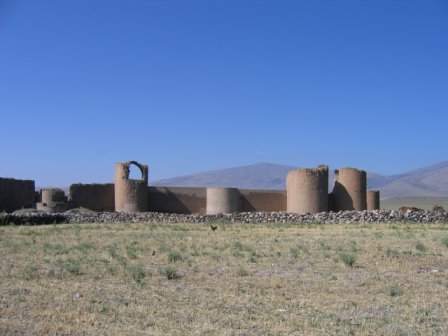
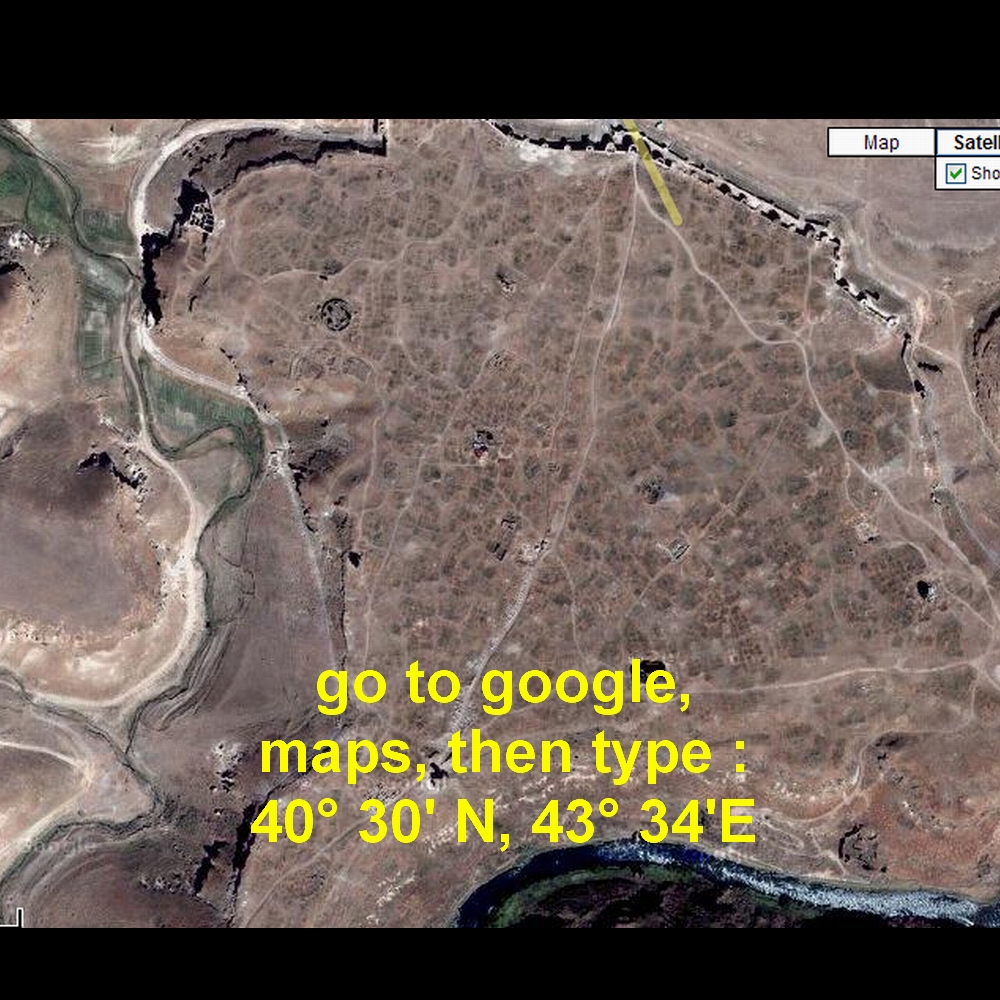
Now we often talk about everything and anything that is Armenian but did you know that (hey even if you know don't spoil the fun of those who don't ) that once upon a time there was a huge Armenian city called Ani! Armenian chroniclers (Historians) first mentioned Ani in the 5th century AD. Ani had a population of 100,000 - 200,000 people and was the rival of Constantinople!!! Located on now Turkish soil, very unfortunetly (Kars Province) it has become deserted. Also called the "City of 1001 Churches". They described it as a strong fortress built on a hilltop and a possession of the Armenian Kamsarakan dynasty. If I had to travel, that's where I'd go. (Source: Wikipedia.org) Those who are interested (I mean how can you not be!??!) to learn more about this ancient Armenian jewel, go to http://www.virtualani.org/citymap.htm The picture you see is the West side wall, also called the Nicole wall. On a more personal note: I always tried to silence any feeling of racism but frankly it pisses me off to the highest level that this city is located on Turkish soil, who by the way are letting unprofessional archeologists conduct all sort of works and diggs, and if you read further you'll see that great damage has been done to the city's remains during the period of 2006-2007. And since i'm so cool, I got you the coordinates so you can check it on the google satellite map (40° 30' N, 43° 34'E) Anyways! I hope you find this interesting.

 1 point
-
Former Glendale resident looks to revive Armenian winery tradition 12:43 25.07.2014 The Glendale News-Press presents the story of Varuzhan Mouradian, who hopes to bring Western winemaking traditions to Armenia. Mouradian, a wine enthusiast, left his job as an accountant in Glendale to move to Armenia nearly three years ago. Not far from Varuzhan Mouradian's Armenian vineyard, volcanic stones from thousands of years ago dot the landscape of an ancient winery. Armenia is home to one of the oldest-known winemaking facilities, which researchers found in a cave a few years ago, but it's by no means a wine mecca. That didn't stop Mouradian, a former Glendale resident and wine enthusiast, from buying open land in a valley there and planting grape vines. He dreams of turning his rows of Areni and Kakhet grapes, varietals indigenous to Armenia, into a boutique winery fit with a Chateau façade and tasting room -- a rarity in the country. He fell in love with boutique wineries in Napa and the Santa Ynez valleys when he lived in California and he wants to bring that same kind of ambience to his homeland, no matter the risks. "One day, I went with my wife to an Italian restaurant, and I looked at all these nice bottles of wine, and I said, 'Look, one day, I will be marrying wine. I will marry to the vine,'" he said from his home in Yerevan, which is about 15 miles from his vineyard in the Ashtarak Valley. "I am married to the vine and the wine is born from that love." There are about 20 winemaking enterprises in Armenia, according to a 2012 report written by an Armenian think tank analyzing the potential growth for the country's wine sector. Comparatively, there are more than 3,700 bonded wineries in California, according to the Wine Institute, an advocacy group. Armenia and California are home to roughly 3 million and 38 million people, respectively. Most Armenian winemakers buy their grapes from small farms rather than growing their own, according to EV Consulting's report. Between 1976 and 1980, Armenian wineries produced 88.4 million liters of wine, dropping to 6.8 million in 2011. EV Consulting attributed the slide to Soviet rule. Some winemakers still use outdated Soviet equipment and value quantity over quality, the report states. But Mouradian believes Armenia can improve its wine reputation and export fine wines. The government is slowly creating tax incentives to encourage the sector's growth, he said, and a handful of vintners like him want to create a tourist draw. "We don't have Armenia as a wine country on the map," Mouradian, 48, said. "I'm positive after five, six years, yes, Armenia will become one of the wine countries known by the world." Mouradian was born in Armenia, but moved to Glendale when he was 24 in search of job and life opportunities. He met his wife and they later had four children. He had a successful career and invested some of his money in Armenian land and property, with hopes of one day selling it and making a profit once the Armenian economy improved. But he became ill and could no longer take the stress of his job. He always admired his clients in the creative sector and yearned for a change of pace. "I was missing something," he said. "I thought I needed to do something creative." He and his family picked up and moved to Yerevan, but his eldest daughter, a student at UCLA, stayed behind. Soon after moving, Varuzhan reached out to his Armenian cousins to help him convert the open land he bought into a vineyard. Mouradian has the land, the grapes and has made a few test batches of blended wines, but he doesn't have a name for his winery and he hasn't put any bottles on the market. "We did a couple barrels just for testing purposes, that's all," he said. "I think they are good. They are perfect. Next year, I think we'll go a little further." http://www.armradio.am/en/2014/07/25/former-glendale-resident-looks-to-revive-armenian-winery-tradition/1 point
-
Ancient Armenian City Reveals New Secrets August 25, 2014 An engraving from 1842 by Charles Texier depicting the walls of Ani Turkish archaeologists have recently published discoveries made underneath the ancient Armenian capital city of Ani. Receding water has revealed an opening to a comprehensive network of tunnels dug beneath the ancient city located in present day Turkish province of Kars. Once a powerful city the capital of the Armenian kingdom of the Bagratuni dynasty, Ani today stand abandoned and desolate. At its zenith Ani rivaled the likes of Constantinople, Baghdad and Cairo in size and influence. By the 11th Century Ani had grown to over one-hundred-thousand people. Renowned for its splendor and magnificence, Ani was known as `the city of 40 gates' and `the city of 1001 churches.' It would later become the battleground for various contending Empires, leading to its destruction and abandonment. Today Ani largely remains a forgotten ancient ghost town in modern day Turkey. During the international symposium titled `Underground Secrets of Ani' organized by the Caucasus University of Kars, the researcher Sezai Yazıcı stated to the press that (among other finds) they have discovered hidden water channels, monks' chambers, meditation rooms, huge corridors, branching passageways and trapped tunnels. `One can easily lose the sense of direction.' ` he remarked. Over 823 underground structures have been found with a length of over 500 meters. Most of these structures were used as residences, other structures included churches, water channels, dovecotes, etc. The researchers have mapped the underground structures and passageways. According to Yazıcı these discoveries have been inspired by George Gurdjieff`s writings who in 1886, with his companion Pogossian, has visited the ruins of Ani and discovered some passageways with rotten furniture, pottery and a pile of parchments in monks chambers. Although Gurjieff was fluent in Armenian (being born in Armenia himself), he could not comprehend the words on these scrolls as they were written in the Old Armenian (commonly known as Grabar). Gurdjieff remained intrigued by these parchments which upon deciphering revealed a mentioning of an ancient esoteric brotherhood that sparked his imagination. Read his accounts -> HERE http://www.virtualani.org/accounts/gurdjieff.htm http://www.horizonweekly.ca/news/details/473671 point
-
Is this the first time, that a furkish newspaper admits publicly about Ani and the Armenian Kingdom on that soil?1 point
-
http://www.youtube.com/watch?v=O0RXxXi30x0 FruitsMax Natural FruitsMax is made from all-natural fruits and has all of the essential vitamins, minerals, antioxidants and fiber. It has No preservatives, No artificial colors, No artificial flavors and is GMO free. CORPORATE HEADQUATERS / USA Maxx Inc. Address: 18751 Ventura Blvd., Tarzana, California 91356, USA Tel: +1-877-378-4809 E-mail: info@myfruitsmax.com MANUFACTURING FACILITIES / Armenia VitaMax-E LLC. Address: Rubinyants 27/55, Yerevan, Republic of Armenia Tel: +374-98-536-777 E-mail: manufacturing@myfruitsmax.com1 point
-
THE FALL OF ANI The nomadic Seljuk Turks were thrown out of Central Asia and the first waves began to reach Armenia and Asia Minor in the second half of the XIth century. The Byzantines were not successful in checking the advance of the Seljuk hordes. In 1064, the Seljuks, under a prolonged and bloody siege managed to break into the city of Ani. After thoroughly looting the city of its riches, the Seljuk chieftain of Ani, Alp-Arslan sold the city to another Seljuk chief, Abulsuar, in1072. In the Battle of Manazkert (Manzikert) in 1071, the Seljuks scored a decisive victory over the Byzantine forces. Catastrophically for the Byzantines and the highly civilized Near East of the period, the Emperor Romanus Diogenes, who personally led the troops, was taken prisoner. After Manazkert, it was evident that the Seljuks were a serious force to be reckoned with throughout the Near East. Ani was ruled (with interruptions) by the Seljuk Shadadian clan until 1199. THE MOTHER CATHEDRAL 12 CIRCLES LEADING TO THE CENTER THE 7TH SIGN OF LIBRA-SCALES OF THE ANCIENT ARMAN ZODIAC REPRESENTING EARTH AND THE SETTING SUN IS ABOUND THROUGHOUT TRADITIONAL ARMENIAN ARCHITECTURE AND WAS PLACED IMMEDIATELY ABOVE WINDOWS [LUSAMUT -- ENTRY POINT OF LIGHT] INCIDENTALLY OMEGA -- Ω THE LAST 24TH LETTER [OR 8+8+8 CHRIST CONSCIOUSNESS] OF THE GREEK ALPHABET ESOTERICALLY STANDS FOR PERFECTION/COMPLETION [ FROM ALPHA -- A -- THE BEGINNING]... APOTHEOSIS CULMINATING THROUGH DEGREES OF SPIRITUAL ILLUMINATION. This period marked the downfall of Ani as an important commercial and cultural center. Many master craftsmen and prominent members of the city were killed or captured by the Seljuks. Ani that once was a thriving hub of fine pottery, jewelry and other highly prized artifacts was relegated to a status of a mediocre Seljuk military fortress-outpost. As a result of which, Ani throughout the XIIth century was a primary target for offense and defense. The almost unceasing warfare and the change of rulers caused further damage to the stability and prosperity of the once important city. The heavy taxation imposed by the Seljuk tribal leaders began a steady outflow of its citizens to more safer and prosperous places. The trade routes and the passing caravans now chose alternative routes on their way to and from the Far East to the commercial centers of the West. The Shadadian rule was overthrown several times (in 1124, 1161 and 1174) by the resurgent Armenian headed by the remnants of Armenian nobility in the East. The most powerful of these, was the House of Zakar.. In 1199, Commander Zakare of the Zakarian house, liberated Ani from the Shadadian clan and made Ani the provincial center of the newly consolidated Zakarian possessions throughout parts of East Armenia. The Zakarian princes began to rebuild the great city of Ani. They reconstructed the old and built new churches, walls, caravan houses (hotels), palaces, baths and residential quarters. The revival of Ani continued until the Mongol invasions that penetrated the Near East in 1236. The Mongol rule was short lived. New Turkic waves from Central Asia devastated Armenian cities and the countryside. Ani was not spared and sustained the same faith as other Armenian centers of civilization. The city would never again recover its former grandeur. By the XVIIIth century, Ani was virtually all but an abandoned city, a "ghost city" as the modern Turkish guides refer to the visiting tourists. In 1878, the Russian army and Armenian volunteer fighters liberated the Kars province from the Turks. The liberated province included the Holiest of Holies, the Holy Symbol of Armenia, "the center of the world," -- the Twin -- Peaked Ararat-Masis. The province also included the ruins of Ani. In 1919 the province of Kars formed part of the restored Armenian State - the Republic of Armenia - the First Republic, only to be yet again invaded and annexed by the Turks a year later. Ani today is within the boundaries of Turkey, slowly rotting away in front of the eyes of the civilized world and UNESCO. In 2003, a genocide of different kind -- of cultural monuments took place, in the ancient, medieval Armenian cemetery of Julfa (Jugha) in Nakhichevan. Imitating the uncivilized brutal behavior of the Taliban, the Azeri Turks, who like the former used the cloak of Islam (which always has been contrary to the "Turkish method" of destruction, Islam standing and representing first and foremost Culture) dynamited thousands of priceless khachkar-cross-stones, each bearing the superb marksmanship of ancient Armenian stone masons. The state-sponsored vandalism completely destroyed from the face of planet Earth yet another treasure of the ancient world. Again the world watched, or more precisely simply did not "see" (read: care), save for few principled individuals and organizations who sounded the alarm to the international community as the destruction was taking place in the opening years of the...Twenty First Century. It is almost certain that the faith of the ruins of Ani, and indeed thousands of other ancient, priceless Armenian cultural monuments that are outside of the care and protection of the Armenian people would receive the same faith at the hands of the Turkish "governments." The Turkish chiefs are not giving up their chance of making a "quick buck" from the ruins, before the fine architectural marvels of civilization fade away. They organize and lead tours of Western tourists trough the "ghost city" and describe the great "Christian wonders". The guides are specifically instructed by the government military generals charged with running Western Armenia (along with destroying last vestiges of Kurdish life in the southeast), to never mention ARMENIA or ARMENIANS in the guide books and to the visitors. The Turks are trying very hard to cover up the past and to rewrite history. The European Union has made it clear that Turkish government has to have numerous fundamental reforms that will bring the country from the current military junta environment into a modern democratic state. The Anti-Armenian policy of Genocide denial, support of Azeri aggression against the Armenian people and further destruction of the historic monuments is leaving this country, contrary to the wishes of many of its citizens, in the grips of the dictatorship of the military junta that has no place in the EU, the family of civilized nations of the world. Written by Gevork Nazaryan1 point
-
I did take the time to search the forum - the bad thing is when you type the word ANI it doesn't let you search for anything because you have to have more then 4 letters. I tried to read topic after topic but please man my idea will skip my mind if we try to search for the whole thread for one topic, and you know better that there is too many topics!!!1 point